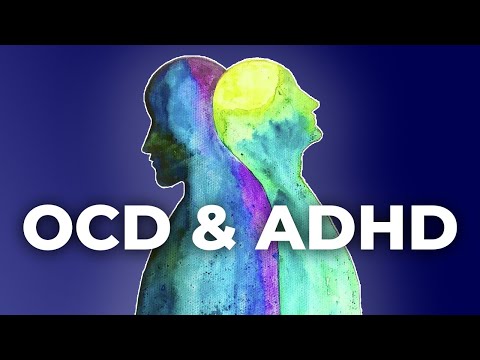
You know how life can throw a bunch of stuff at you all at once? Well, for some people, that’s what living with ADHD and OCD feels like. It’s like being caught in a mental tug-of-war.
Imagine your brain switching gears faster than a race car while also getting stuck in the pit stop. Yeah, that’s the vibe. One moment you’re zooming through thoughts, and the next, you’re obsessing over every little detail.
It can be a wild ride! And it makes figuring out day-to-day life pretty tricky. So let’s chat about how these two can dance together and mess with your mental well-being. Sound good?
Understanding ADHD and OCD in Females: Symptoms, Diagnosis, and Treatment Options
Understanding ADHD and OCD in females can be quite a ride, you know? Both of these conditions can mess with daily life in ways that are sometimes hard to spot. So, let’s break it down.
ADHD (Attention-Deficit/Hyperactivity Disorder) is often characterized by struggles with attention, hyperactivity, and impulsiveness. In females, the symptoms can look different than in guys. Instead of bouncing off the walls, many girls might seem more daydreamy or quiet. They could forget their homework or misplace things constantly. It’s like having a million thoughts swirling around but feeling stuck trying to focus on just one.
OCD (Obsessive-Compulsive Disorder), on the other hand, involves intrusive thoughts (obsessions) that lead to repetitive behaviors (compulsions). A girl with OCD might wash her hands repeatedly because she has this nagging fear of germs. But here’s where things get interesting: ADHD and OCD can sometimes overlap. You might be dealing with a racing mind from ADHD while also feeling compelled to check things over and over from OCD.
When it comes to diagnosis, it can get tricky for females. Sometimes, symptoms of ADHD are overlooked because they don’t fit the typical mold we’ve come to expect. Girls might not act out as much compared to boys, leading professionals to miss the signs altogether. With OCD, the compulsive behaviors might hide behind perfectionism or anxiety rather than obvious rituals.
For treatment options, it’s usually a mix of therapy and medication—though everyone’s journey is unique! Here are some common approaches you might find:
- Cognitive Behavioral Therapy (CBT): This is super effective for both conditions! It helps reframe negative thoughts and build better coping strategies.
- Medication: Stimulants are often used for ADHD, while SSRIs (Selective Serotonin Reuptake Inhibitors) can help with OCD.
- Psychoeducation: Learning about both disorders helps patients understand their challenges better.
- Mindfulness: Techniques like meditation can help manage stress and anxiety associated with both disorders.
But there’s no one-size-fits-all solution here—what works for one person may not work for another! It takes time and patience to figure out what fits best.
So imagine a girl named Lily who has ADHD but also deals with OCD symptoms—like constantly checking if she locked the door before leaving home for school. One day she gets so wrapped up in her obsessive thoughts that she winds up late to class…again! That mix makes her feel anxious and overwhelmed.
It’s important to recognize these overlapping symptoms because they can impact emotional well-being big time. Feelings of shame or frustration about not being able to focus or control compulsions can lead down a dark path in terms of self-esteem.
In short, understanding how ADHD and OCD interact especially in females provides insight that helps demystify some pretty complex feelings and behaviors happening behind the scenes. With awareness comes clarity…and hopefully better strategies for managing life day by day!
Understanding the Overlap: Symptoms of ADHD and OCD Combined
Alright, let’s chat about ADHD and OCD. You might be thinking, how do these two completely different things overlap? Well, they can actually share some symptoms that could mess with a person’s day-to-day life. So, let’s break it down!
ADHD, or Attention Deficit Hyperactivity Disorder, is mostly known for symptoms like:
- Inattention – like zoning out during conversations or forgetting things easily.
- Hyperactivity – always feeling the need to move around or talk a lot.
- Impulsivity – acting without thinking first and making hasty decisions.
On the flip side, OCD, which stands for Obsessive-Compulsive Disorder, comes with its own set of quirks. People with OCD typically experience:
- Obsessions – unwanted thoughts that just pop up and won’t go away.
- Compulsions – rituals or behaviors done to manage those pesky thoughts, like washing hands repeatedly.
The tricky part is where they overlap. Both disorders can lead to difficulties in focus and concentration. Picture this: you’re trying to read but keep getting sidetracked by intrusive thoughts about whether you locked the door. It gets frustrating! And even if you can focus for a bit, those worries can make you feel all jittery inside.
The Interplay: When someone has both ADHD and OCD, they might mix impulsivity with compulsive behaviors. For example:
- You might rush to do something because of an urge (classic ADHD), but then find yourself stuck in a ritual because of an obsessive worry (OCD).
- This combo can lead to constant distraction—like starting ten different tasks but feeling compelled to check your phone every few minutes because you’re worried about missing something important.
This overlap can also mess with your emotions. Imagine feeling anxious about not completing tasks on time due to impulsiveness while battling the anxiety generated from obsessive thoughts. It’s like being stuck in a whirlwind of stress!
The Takeaway: Understanding these overlaps is super important for anyone who might be experiencing them or knows someone who is. By recognizing how these symptoms intertwine, it’s easier to find effective strategies for managing them together. It’s not just about ticking one box or another; it’s about navigating through this blend of experiences in a way that works for you!
If you feel this resonates personally or hits close to home for someone you know, it could be beneficial to talk about it more—just saying! These kinds of discussions can really help shed light on what you’re going through.
Exploring the Neurobiological Connection Between OCD and ADHD: Insights and Implications
Oh man, when you start looking at OCD and ADHD, it’s like opening a can of worms! Seriously, these two conditions are often discussed together because they can overlap a lot more than you might think. So, let’s dig into that neurobiological connection and how these two play off each other in our brains.
OCD (Obsessive-Compulsive Disorder) is all about those pesky intrusive thoughts and compulsive behaviors. You know, like when you can’t stop washing your hands because you’re worried about germs? That’s your brain spinning its wheels on negative thoughts and rituals to try to feel safe. It’s a struggle between what your mind is telling you and what you want to do.
On the flip side, ADHD (Attention-Deficit/Hyperactivity Disorder) messes with your attention span and impulse control. Imagine trying to study for an exam but instead getting distracted by every tiny noise around you – yeah, that’s ADHD. It can feel like having a million tabs open in your brain at once.
Now here’s where it gets real interesting: research shows that both of these disorders have some similar neurobiological underpinnings. They often share issues with certain neurotransmitters, especially dopamine. This little guy is crucial for motivation and reward processing. When it doesn’t work right, both OCD and ADHD can pop up in the same person!
Take dopamine again – people with ADHD often have lower levels of it, which can lead to impulsivity or inattentiveness. But in OCD, there might be an overactivity in dopamine pathways that leads to those repetitive behaviors meant to reduce anxiety. You see how that could create a bit of chaos in the mind?
And then there’s the frontal cortex, which is responsible for decision-making and self-control. In folks with OCD or ADHD, this area may not communicate well with other parts of the brain like the basil ganglia, which plays a role in motor control and habit formation. So basically, if you’re stuck in that loop of checking locks or counting things because of OCD while also fighting against distractions from ADHD – well, that’s not an easy road!
It gets even more tangled when we think about how these disorders can affect one another. If someone has both ADHD and OCD, they might show increased levels of anxiety. The constant need for reassurance driven by OCD can clash with the distractibility from ADHD.
So what does this mean for psychological well-being? Well:
- Awareness: Understanding how both disorders interact helps in finding better treatment approaches.
- Treatment Strategies: Treatments focused on improving dopamine levels or managing frontal cortex activity might benefit someone dealing with both.
- Support Systems: Creating supportive environments where these individuals feel understood could lead to better coping mechanisms.
All this makes it super important for healthcare providers to consider both conditions together rather than treating them as separate entities; doing so might lead to more effective interventions.
In short, while OCD and ADHD may seem different on the surface—they’ve got some deep-rooted connections when you peek under the hood! And knowing this isn’t just academic; it has real-life implications for people trying to navigate their daily lives while managing these challenging conditions.
Ah, the dance between ADHD and OCD can be quite the rollercoaster ride, right? You’ve probably seen how these two conditions can feel like they’re in a constant tug-of-war. ADHD, with its whirlwind of thoughts and distractibility, seems to clash with OCD’s intense need for control and order. It’s like trying to balance a supercharged race car on a tightrope—exhilarating but oh-so-tricky!
I remember a friend of mine who has both ADHD and OCD. He’d get so caught up in his racing thoughts about what he needed to do that he’d often lose track of time—like the world around him was just spinning too fast. Then, bam! Suddenly he’d be hit with an obsessive thought: “What if I didn’t double-check my work?” And there he was, trapped in a loop, rechecking everything while chaos brewed around him. It’s tough to see someone you care about getting dragged into that cycle.
Now, think about how all of this can really wear you down mentally. Constantly swinging between impulsivity and perfectionism creates this exhausting cycle. Just when you feel like you’ve got one thing under control, your mind swoops in with something else that demands attention. You might start to feel overwhelmed or anxious because each condition pulls at your focus in different directions.
It’s crucial for anyone navigating this interplay to find ways to create some harmony within themselves. Some folks find success through routines that blend structure (thanks to OCD tendencies) with flexibility (a nod to ADHD). Finding that sweet spot where both sides can coexist, even if it feels like juggling flaming torches sometimes—that’s where the magic happens.
And hey, it’s okay if it doesn’t look perfect! Life is messy—just like our minds sometimes are—and figuring things out takes time and patience. If you’ve got both ADHD and OCD going on or know someone who does, remember: it’s perfectly okay to seek support along the way. You don’t have to be alone on this emotional rollercoaster ride!