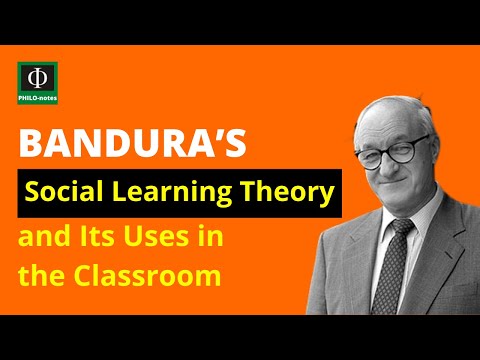
You know how we pick up things just by watching others? Like when you mimic your friend’s laugh or start using their catchphrases. That’s kinda where Bandura comes in.
In 1977, he dropped this idea called Social Learning Theory. Basically, he said that we learn not just from doing stuff ourselves, but also from observing how other people behave.
Think about it—ever seen a little kid copy what they see adults doing? It’s like a mini version of society’s teachings right there in action! Bandura was super into exploring all that and how it shapes our behaviors.
So, let’s get into this whole idea of learning through social interactions. It’s more relevant today than ever, and it totally flips the script on how we think about learning!
Citing Bandura’s 1977 Social Learning Theory in APA Format: A Step-by-Step Guide
Citing sources is a key part of academic writing, helping you give credit and back up your ideas. If you need to cite Albert Bandura’s 1977 work on Social Learning Theory in APA format, here’s how to do it step by step.
First off, you’ll want to start with the basic format for a book or article in APA style. Typically, it goes like this:
Author’s Last Name, First Initial(s). (Year of Publication). Title of work: Capital letter also for subtitle. Publisher.
So for Bandura’s 1977 book, it looks like this:
Bandura, A. (1977). Social learning theory. Prentice-Hall.
If you’re looking at a chapter within an edited book or a specific article he wrote, the format changes slightly.
Now let’s break down what you need to do:
- Author: Always start with the author’s last name followed by their initials.
- Year: Put the publication year in parentheses right after the author’s name—like 1977.
- Title: The title should be in italics and should use sentence case—only capitalize the first word and any proper nouns.
- Publisher: Finally, mention who published it. For Bandura’s book, that was Prentice-Hall.
If you’re citing a specific idea or concept from Bandura’s work within your text, you’ll want to include an in-text citation too. For this one, just mention his last name followed by the year. So it might look something like:
(Bandura, 1977). This lets your readers know where that info came from without interrupting the flow of your writing.
Let’s say you’re discussing observational learning from his theory; you might write something like:
Observational learning plays a big role in how we acquire new behaviors (Bandura, 1977).
That way, you’re clearly linking back to his original work and making your argument stronger.
If you’re using online resources or journal articles related to Bandura’s theory, make sure to check if there are specific formats for those types of sources as well.
To wrap it all up: Citing appropriately isn’t just about following rules; it’s also about respecting intellectual property. When you use someone else’s ideas—like those from Bandura—you honor their contribution while strengthening your own arguments!
The Lasting Impact of Albert Bandura on Psychological Theory and Practice
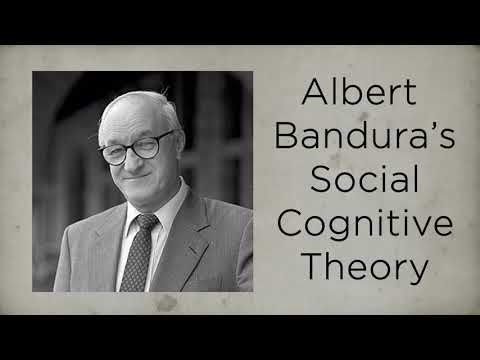
So, let’s chat about Albert Bandura and how he’s seriously shaped the way we think about psychology. You may have heard of his work on Social Learning Theory, which was a big deal when he introduced it in 1977. This theory flipped the script on how we view learning and behavior.
You know how, sometimes, you see someone succeed at something—like a friend nailing a presentation or scoring a killer goal in soccer? You might think, “I wanna do that too!” Well, Bandura proposed that we learn not just by doing but by watching others. This idea is rooted in what he called observational learning. So basically, you pick up behaviors by observing people around you.
He also talked about this neat concept called modeling. Essentially, when you see someone perform an action and get rewarded for it (like praise or high-fives), you’re more likely to imitate that behavior. It’s like if your little sibling sees you getting congratulated for helping someone out; they might start doing the same thing just to earn those nice words for themselves.
Bandura didn’t just stop at watching and copying. He also emphasized the role of self-efficacy, which is all about believing in your ability to succeed. If you feel confident that you can do something—say, getting through a tough exam—you’re more likely to tackle it head-on. He believed this sense of confidence shapes your actions and outcomes, which is super relatable.
His work resonates in various areas—think education where teachers model behaviors they want students to adopt or therapy settings where clients learn from observing new coping strategies. Just imagine if kids were taught social skills through positive role models instead of strict rules; they’d probably pick things up much quicker!
But there’s more! Bandura also explored how environment influences behavior. In his viewpoint, it’s not just nature versus nurture—it’s more like a dance between the two. Your environment affects your learning experiences while your actions can change your surroundings too.
Let’s not forget about his famous experiment with the Bobo doll! In this study, kids watched an adult act aggressively toward an inflatable doll. Later, those kids mimicked that exact behavior when given the chance to play with the same doll! That finding pretty much made waves because it showed evidence of observational learning right in action.
To wrap things up: Bandura’s ideas changed psychology forever by highlighting that learning happens socially and contextually rather than just through direct experience. His theories help explain a lot—from teaching methods to understanding behaviors in different cultures—proving they’re still relevant today.
Here are some key points from Bandura’s work:
- Observational Learning: Learning by watching others.
- Modeling: Imitating behaviors seen in others.
- Self-efficacy: Believing in one’s ability influences outcomes.
- Sociocultural Influence: Environment shapes and is shaped by behavior.
- Bobo Doll Experiment: Showcased observational learning effectively.
So yeah, Albert Bandura definitely left a mark on psychological theory and practice that’s still felt today!
Understanding Bandura’s Four Processes in Social Learning: A Deep Dive into His 1977 Theory
Albert Bandura came up with some pretty groundbreaking ideas back in 1977 about how we learn from others. His theory, known as the Social Learning Theory, suggests that we don’t just soak up knowledge through our own experiences. Nope, we learn a ton by watching what others do and noticing the consequences of their actions. So, let’s break down Bandura’s four key processes that make this whole learning thing tick.
1. Attention
So, first things first: you gotta pay attention. This means you can’t just be in the room when someone else is learning or doing something new; you really have to focus on it. Think about how kids learn to talk or walk by watching their parents or older siblings. The more engaging and interesting the behavior they see, the more they’re likely to pay attention.
2. Retention
After you’ve noticed what’s going on, the next step is somehow hanging onto that information in your brain. That’s where retention comes into play. Simply put, if you can’t remember what you’ve seen, it won’t help you much later on! For instance, if you’re watching a cooking show, your ability to remember how to chop onions or mix ingredients will be crucial if you want to replicate that recipe later!
3. Reproduction
Now comes the fun part—actually doing what you’ve observed! Reproduction means taking those mental notes and putting them into action. Let’s say you’ve watched a friend do a cool skateboard trick a bunch of times; if you’ve remembered it well enough, now it’s your turn to try it out! It might take practice (and maybe some falls), but that’s part of learning.
4. Motivation
The final piece of this puzzle is motivation—what drives you to imitate the behavior? You could witness an amazing performance but still not feel compelled to try it yourself unless there’s some kind of incentive involved. Maybe seeing your friend getting praise for their skateboarding makes you want that too, or perhaps there’s a reward at stake.
In summary, Bandura’s theory isn’t just about knowing these steps individually; they all work together like a well-oiled machine. You notice something (attention), keep it in your mind (retention), give it a shot (reproduction), and then find reasons to keep going (motivation).
Understanding these processes gives us insight into how behaviors spread through society—from kids mimicking parents’ habits right through to adults picking up trends from social media influencers! It’s all connected and highlights just how much we rely on each other for learning new skills and ways of thinking.
So next time you’re watching someone do something impressive—whether it’s nailing a workout move or mastering an instrument—remember: it’s not just luck that gets them there; they probably went through Bandura’s four stages too!
Alright, so let’s chat about Bandura’s Social Learning Theory. It’s one of those concepts that can totally change how we think about learning and behavior. Basically, Albert Bandura came onto the scene in 1977 and said, “Hey, you don’t just learn by doing things yourself; you can learn by watching others too.” That’s pretty mind-blowing, right?
Picture this: maybe you have a little cousin who always seems to pick up on things super fast. You’re sitting there playing a video game, and suddenly he picks up the controller and starts winning without even trying. He’s not just figuring it out; he’s watching you closely, picking up your moves and strategies along the way. That’s Bandura in action!
What makes this theory especially interesting is its emphasis on models in our environments—these could be friends, family members, or even characters from TV shows. It suggests we learn a ton from observing these models and then recreating their actions. Think about it: have you ever caught yourself mimicking someone else? Maybe it was a particular phrase or even body language? Yeah, that’s social learning.
But here’s where it gets deeper: Bandura didn’t just scratch the surface; he also introduced the idea of self-efficacy. The belief in your ability to accomplish something comes into play big time! If you’ve seen someone succeed at something—like nailing a presentation or running a marathon—you might walk away thinking, “Hey, if they can do it, so can I.” That spark of hope really fuels our motivation.
Now let’s think real-world applications for a sec. You see social learning all over the place! In schools with peer teaching methods or even in workplaces where mentorship is a thing—people are watching each other constantly. It shapes how we behave and interact with each other on so many levels.
It does raise some questions too. Like what happens when kids only see negative behaviors modeled around them? Or when media portrayals skew towards violence or aggression? Those influences can seriously shape perceptions of what’s acceptable behavior.
So yeah, Bandura’s Social Learning Theory isn’t just some academic mumbo-jumbo; it feels super relevant as we navigate life today. It highlights how interconnected we are through observation and reinforces that learning is often social—like an ongoing group project where everyone plays a part. How cool is that?