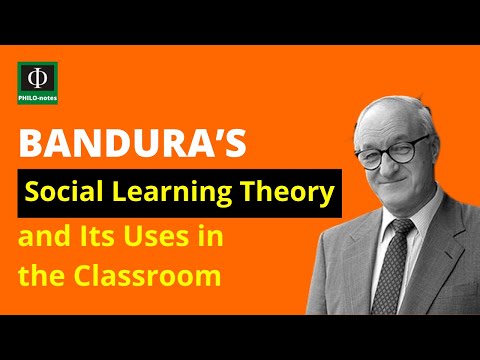
Alright, so let’s chat about something super cool—Social Learning Theory. Ever heard of it?
It’s all about how we pick up stuff by watching other people. Like when you see a friend try a new dance move and suddenly you want to give it a shot too.
That’s basically the vibe! It all comes from this genius named Albert Bandura. He did some pretty wild experiments that really opened our eyes to how we learn from each other.
Imagine learning not just from your own mistakes but also from everyone around you! That’s what this theory is all about.
Grab your coffee, and let’s dig into Bandura’s research and see what it means for us in everyday life!
Understanding Bandura’s Study: Evidence for Social Learning Theory Explained
Alright, let’s talk about Albert Bandura and his groundbreaking research that gave rise to social learning theory. This theory suggests that people can learn new behaviors by observing others. It’s like watching your friend try a new dance move and then thinking, “I can totally do that!”
So, Bandura conducted a famous experiment in the 1960s known as the Bobo Doll experiment. He brought kids into a room with an inflatable clown doll called Bobo. They watched an adult interact with this doll, behaving aggressively—punching it, kicking it, and shouting at it. Afterward, the kids were given a chance to play with Bobo themselves. The results? Many of them mimicked the aggressive behavior they had just seen.
Now, here’s what makes this fascinating: the children didn’t just imitate some of the actions; they also improvised their aggression! Like one kid used a toy gun instead of just punching. This showed that not only do we learn from direct experience but also by watching others and then adding our twist to it.
The thing is, Bandura highlighted three major components in his study:
- Attention: You need to pay attention to learn something. If kids weren’t interested in what the adult was doing or didn’t find it engaging, they probably wouldn’t mimic that behavior.
- Retention: It’s not enough to just see something; you have to remember it too. After observing those actions, kids stored them in memory until they got their turn with Bobo.
- Reproduction: Finally, after paying attention and remembering what they saw, the children had to be able to replicate those actions physically.
But there’s more! Bandura also introduced the concept of reinforcement. He noted that if behavior is rewarded or reinforced—like getting attention or praise—it’s more likely to be repeated later on. It’s kind of like how you might keep telling jokes if your friends laugh at them.
What really emphasized social learning even more was when he observed variations in outcomes based on different contexts. For instance, if children watched a model getting punished for aggressive behavior versus rewarded for being nice, their responses changed dramatically.
This was groundbreaking because it shifted focus from traditional views of learning as merely trial-and-error or direct reinforcement. Instead, it showed that much of human behavior is learned socially through observation and imitation.
Bandura’s study fundamentally changed how psychologists viewed learning process by emphasizing the importance of social context and environment in shaping behaviors—not just personal experiences alone.
So next time you find yourself picking up a habit from someone else or seeing influences in your life around you—think about Bandura! His work helps explain why we might mimic friends without even realizing it; so go ahead, dance like nobody’s watching… but maybe still keep an eye out for your friend who busts out great moves!
Understanding Social Learning Theory: Key Insights and Implications for Behavior and Education
Social Learning Theory is a fascinating concept that basically says you can learn by watching others. This idea comes from Albert Bandura, a psychologist who really dug into how we pick up behavior and skills just by observing the people around us. Crazy to think about, right?
Observational Learning is at the heart of this theory. You see someone do something, like riding a bike or playing a video game, and then you try it yourself. This kind of learning shows that it’s not all about direct experience. Sometimes just watching is enough to get the hang of things!
Then there’s Modeling. When you watch someone you admire—like a parent, teacher, or even a celebrity—you often want to imitate their behavior. For instance, if your friend shows confidence while speaking in front of others, you might feel inspired to do the same. It’s like picking up traits and habits without even realizing it.
So what about Reinforcement? Well, Bandura proposed that when we observe someone getting rewarded for their actions, we’re more likely to replicate those actions ourselves. Think about how kids will mimic their favorite cartoon characters who get praised for good deeds on screen. They’re learning what behaviors are valued in society.
Another important piece is the idea of Self-Efficacy. Basically, if you believe you can do something—even if you’ve never tried it before—you’re way more likely to take that leap and give it a shot. If you’ve seen a cousin ace an exam after studying hard, you might think, “Hey! If they can do it, so can I!” That boost in confidence can be a game-changer.
In education settings, these insights are super valuable. Teachers can use modeling to show students how to approach problems or engage with material effectively. Instead of just lecturing on math concepts, they could demonstrate solving equations step-by-step while students watch and absorb the process.
But here’s where it gets really interesting: learning doesn’t happen in isolation. It’s impacted by social context. If you’re in an environment where collaborative learning is encouraged—like group projects or discussions—you might find yourself picking up skills faster than in a traditional lecture hall where everyone’s sitting quietly.
And remember that social media plays into this whole theory too! Kids today are constantly watching influencers and peers online which shapes their behavior and expectations in real life. The line between observing and participating has definitely blurred—think about all those TikTok challenges!
So next time you’re trying to learn something new or help others learn, consider how powerful observation can be. It’s not just what we direct teach; it’s all those little moments where we’re catching behaviors from each other every day!
Understanding Learning Through Bandura’s Research: Insights on Observational Learning and Behavior Modeling
Understanding Learning Through Bandura’s Research
So, let’s chat about Albert Bandura and his research. He’s like a big name in psychology, especially when it comes to how we learn from others. Basically, he introduced the idea of observational learning, which is a fancy term for learning by watching what others do. You know how you might pick up some dance moves just by watching your friend? Yeah, that’s observational learning in action.
Bandura’s most famous experiment is the “Bobo Doll” study. In this test, kids watched adults act aggressively towards an inflatable doll called Bobo. Guess what happened? The kids who saw the aggressive behavior were likely to imitate it when they got their turn with the doll! It was like they were little sponges soaking up what they saw. This showed that people—especially kids—can learn not just through direct experience but also by observing others.
Here are some key points about Bandura’s Social Learning Theory:
You see, Bandura didn’t just stop at saying we learn by looking; he really dove into why and how it works! Like, if your friend is super successful at something and gets lots of attention for it, you might think, “Hey, I want that too!” And that little motivation sparks the desire to try and mimic their success.
Also interesting is how these ideas apply in real life. Think about children who pick up language skills by listening to their parents or peers talk. They listen first and then start talking themselves! It’s all connected back to that observational learning concept.
In today’s world filled with social media influencers and viral challenges, these principles are everywhere. People see others doing things online—like cooking or fitness routines—and they often imitate those behaviors because they think they might get similar results or recognition.
So when you think about Bandura’s research on learning through observation, it goes beyond just “monkey see, monkey do.” It’s more like «monkey sees and then decides if it’s worth imitating.» By understanding this process better through Bandura’s lens, we can recognize how powerful our environment is when it comes to shaping behaviors—both good and bad.
The bottom line? We often underestimate just how much we pick up from those around us without even realizing it! Whether it’s good habits or not-so-great ones, observation could seriously influence our choices every day—in ways we sometimes don’t expect!
Social Learning Theory is pretty fascinating, right? Basically, it says that we learn not just from our own experiences but by watching other people too. Albert Bandura was the guy behind this idea, and his research really opened up some eyes about how we pick up behaviors, attitudes, and even emotions just by observing others.
So, there’s this classic experiment of his that I can’t help but think about when talking social learning. Remember the Bobo doll study? Bandura set up this scene where kids watched adults behaving aggressively toward this inflatable clown doll. After seeing that, the kids were more likely to imitate that aggressive behavior. It’s kind of wild to think how much people can absorb simply from observation—even if no one directly teaches them anything.
You know what’s interesting? This concept has a huge impact on everything around us. Think about it: every time you see your friends handle stress in a certain way or react to challenges, you’re picking up on those behaviors too. It’s like you’re downloading their coping strategies into your mental toolkit without even realizing it!
But it doesn’t stop there. Social Learning Theory also explains why trends spread so quickly on social media or why you might start mimicking accents or phrases after hanging out with someone for a while. The influence of role models is powerful; we often look at what they do and just… follow suit.
A while back, I remember hearing about a kid who started volunteering because he saw his older brother doing it regularly. That’s such a clear picture of social learning in action! He didn’t get any formal teaching about empathy or community service; he just saw someone he admired doing something meaningful and decided to join in.
Of course, there’s another side to all this as well—like the darker aspects of social learning. If someone grows up watching negative behaviors—like aggression or prejudice—it could really shape their own actions in harmful ways. It’s a reminder that we have to be mindful of what we’re putting out there since we’re not only influencing ourselves but also the people around us.
So yeah, Bandura’s work turns our understanding of human behavior on its head a bit. We’re not just these isolated thinkers making decisions based solely on our experiences; we’re part of this big web where observation plays a massive role in shaping who we are and how we interact with the world around us. It’s kind of comforting to know we’re all connected through these shared learning experiences!