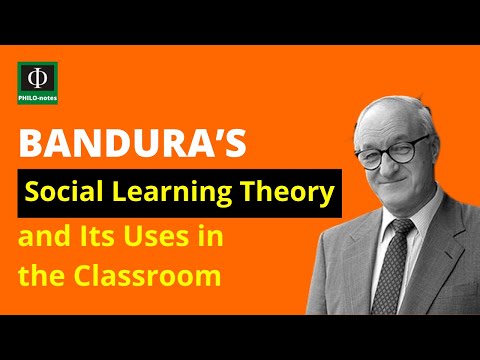
So, let’s talk about this cool idea called Social Learning Theory. You know that moment when you see a kid pick up a toy because they saw another kid playing with it? That’s pretty much the heart of it.
Albert Bandura, a big name in psychology, really dug into this concept. He showed us that we learn not just from our own experiences but from watching others too. Crazy, right? Like, ever notice how we pick up habits or phrases from our friends?
His work paints a vivid picture of how observation, imitation, and modeling shape our behavior. It’s like we’re all sponges soaking up everything around us! So buckle up because Bandura’s insights might change how you think about learning and behavior!
The Lasting Influence of Albert Bandura on Modern Psychology
Albert Bandura, a name that keeps popping up in discussions about psychology. His work has had such a huge impact, especially in the realm of social learning theory. So, what’s the deal with this guy? Let’s break it down.
First off, Bandura introduced the idea that we learn not just through direct experience, but also by observing others. This concept is ground-breaking because it shows that people can learn new behaviors and skills by watching someone else do them. Picture this: you’re a kid, watching your older sibling play video games. You pick up on their moves and strategies without ever picking up a controller yourself.
One of his most famous experiments was the **Bobo doll experiment** in 1961. In this study, kids watched adults behave aggressively towards an inflatable clown doll called Bobo. Later, when these kids were left alone with the doll, they mimicked those aggressive behaviors! It really showed how observational learning works—seeing someone behave in a certain way can influence your own behavior.
Another key point from Bandura’s work is the concept of self-efficacy. This means how confident you are in your ability to execute tasks or achieve goals. Bandura believed that high self-efficacy can lead to better performance and persistence when faced with challenges. Think about that time you were gearing up for a big test or competition—and if you felt like you could crush it just because you’d practiced enough or seen others succeed? That’s self-efficacy at play!
Bandura also emphasized that our behavior isn’t just shaped by external rewards and punishments but by internal factors. This idea shifted the focus from purely behavioral approaches to considering thoughts and beliefs as essential factors influencing how we act.
Now, let’s think about how Bandura’s influence stretches into modern times. His concepts are everywhere—in education, therapy, even marketing! Teachers use his principles to create more effective learning environments by encouraging collaborative learning and role modeling positive behaviors. In therapy settings, techniques drawn from his ideas help clients understand patterns of their thoughts and behaviors better.
And we can’t forget social media! You scroll through platforms like Instagram or TikTok and see influencers displaying lifestyles or habits—guess what? You’re likely picking up some of those cues just by watching! That’s social learning theory in action right there.
In summary, Albert Bandura didn’t just contribute theories; he changed how we view learning and behavior altogether. His work reminds us that we’re not islands—we absorb so much from those around us! The influence of his ideas continues to ripple through modern psychology every day as we learn from each other—and maybe even from our virtual friends.
Understanding Social Learning Theory: Key Insights and Implications for Behavior and Education
Sure, let’s break down Social Learning Theory in a straightforward way. It’s pretty cool how our behavior comes from what we see around us, right? This idea takes center stage with **Albert Bandura**, who really dug into how we learn from others.
What is Social Learning Theory?
Social Learning Theory suggests that people can learn new behaviors by observing others. So, it’s not just about doing things yourself; you can pick up a lot just by watching. Think about it like this: You might learn to ride a bike because you watched your friend do it first.
The Key Components
There are a few main ideas in this theory that are super important:
- Observation: This is where learning kicks off. When you see someone else doing something—like solving a math problem—you start to grasp how it’s done.
- Imitation: Once you’ve seen something, the next step is to try and copy it. Remember when you imitated your favorite movie star’s dance moves? Yeah, that’s imitation in action.
- Modeling: Not every action deserves imitation. We often choose role models—people whose behaviors we admire and want to replicate.
- Reinforcement: If the behavior gets positive feedback (like praise or rewards), chances are you’ll do it again. It’s like when your teacher gives you kudos for doing well on an assignment; you want that feeling again!
- Cognitive Processes: Your thoughts play a role too. You weigh the pros and cons of behaviors based on what you’ve observed.
Bobo Doll Experiment
One of Bandura’s most famous experiments involved kids and a Bobo doll—a big inflatable toy that gets knocked over easily. In a nutshell, kids who saw adults acting aggressively towards the doll were more likely to mimic that behavior themselves. It really showed how observation directly influenced their actions.
The Implications for Behavior
Understanding this theory helps us see why we act the way we do. It’s not always about individual experience; sometimes it’s about what we’ve absorbed from our surroundings—friends, family, media, all of it! This makes sense when you notice how trends spread or why some kids pick up bad habits just because they see their peers doing them.
The Role in Education
In classrooms, Social Learning Theory reminds teachers to be aware of modeling behavior. When educators demonstrate problem-solving skills or positive social interactions, students are likely to follow suit! Plus, encouraging collaboration among students can enhance learning because they learn from each other just as much as they do from their teachers.
So yeah, understanding Social Learning Theory gives us insights into human behavior and shows us that we’re all influenced by those around us—in ways big and small! Just keep thinking about all those times you’ve picked up habits or skills just through observation; it’s pretty wild how interconnected we all are!
Understanding Bandura’s Theory: The Three Key Concepts Explained
Alright, let’s break down Bandura’s Social Learning Theory. It’s really interesting how we learn from one another, and Bandura nailed it with three key concepts. So, here we go!
1. Observation
The first big idea is observation. Basically, this means that you can learn new behaviors just by watching others do them. It’s not just about doing stuff yourself; seeing someone else can be just as powerful. Like, think about kids who imitate their parents or teachers. Ever notice how kids often copy the way adults react to things? That’s observation in action.
2. Imitation
Next up is imitation. After you observe something, you might actually try to imitate what you saw. This doesn’t mean it’ll always work out perfectly—sometimes things go hilariously wrong! For example, a kid sees an older sibling riding a bike and then jumps on their own bike without knowing how to balance yet. They’re imitating but maybe not quite getting it all right away.
3. Modeling
Finally, we’ve got modeling. This concept is like taking observation and imitation a step further. It’s about being influenced by someone you look up to or see as a role model. You start picking up their attitudes and behaviors because they seem effective or appealing to you. Think of athletes who inspire young players; they see those pros succeed and want to mirror their techniques… even their mindsets.
The beauty of Bandura’s work is that it shows how connected we are through our actions and reactions. Remember the famous «Bobo Doll» experiment? Kids watched adults hit this big inflatable clown doll, and guess what? They did the same thing when given a chance! It’s kind of wild when you think about how easily those behaviors can be passed on.
So basically, Bandura opened our eyes to the fact that learning isn’t just about reading books or hitting the grind alone—it’s also social! You pick up things through watching others navigate the world around them.
You know, I was thinking about how we learn from each other. It’s like, a lot of our behaviors come from watching the people around us, right? That’s where Albert Bandura’s Social Learning Theory comes in. He’s that guy who showed us that we don’t just pick up things by doing them ourselves; we also learn by observing others.
I remember this one time in school when a friend of mine, let’s call him Jake, got really into skateboarding. At first, I was just sitting on the sidelines, but I watched him fall and get back up so many times. Honestly, it was amazing to see his persistence. Eventually, I couldn’t help it—I had to try it myself! Watching him struggle and succeed made me believe I could do it too. That’s basically Bandura’s idea: we see someone else do something, and it shapes our own actions.
One of the cool things about Bandura’s work is how he included the concept of modeling. It’s not just about seeing someone skate; it’s also about taking in their attitude and reactions to challenges. If Jake had been super discouraged every time he fell, maybe I would’ve thought twice before grabbing my board—like “Nah, that looks hard.” Instead, he was all about having fun despite the spills.
Then there’s this thing called self-efficacy he talked about. This is all about believing you can succeed in a task based on having seen others do it. Isn’t that such a big deal? If you feel like you can tackle something because someone else did it before you—even if they struggled—you’re more likely to jump in yourself! It totally connects with why role models are so important in life.
So anyway, Bandura showed us that learning isn’t just memorizing facts or practicing skills solo; it’s deeply linked to social interactions and contexts. Whether we’re talking about kids learning from parents or friends influencing one another at school or work—the power of observation is like a hidden gem of learning.
In today’s world filled with social media and influencers everywhere—seriously—it’s fascinating to think how these principles still apply. People watch what others post all the time and often model their behaviors based on that content! Just imagine how much we keep absorbing without even realizing it!
Honestly, Bandura’s insights opened up so much for psychology and education that it’s hard not to appreciate how they connect to our everyday lives!