You know how we’re always trying to figure out what’s going on in our minds? Seriously, it’s like a mystery sometimes.
Cognitive development theory is all about that. It’s like peeling an onion of our brains, layer by layer.
What makes us think, learn, and grow? This theory dives into how we pick up skills and ideas from when we’re tiny kids to being adults.
Ever watched a child learn to tie their shoes? Or seen them get super curious about the world around them? That’s cognitive development in action!
Let’s break it down together and see what psychology says about how our thoughts evolve over time. Buckle up; it’s gonna be interesting!
“Exploring Theories of Cognitive Development: Insights into Psychological Frameworks”
Cognitive development is one of those things that really shapes how we think, learn, and understand the world around us. You know how sometimes you look back at your childhood and realize how much you’ve changed in terms of thinking? That’s cognitive development at work! Basically, it refers to the ways in which our ability to think and learn evolves as we grow.
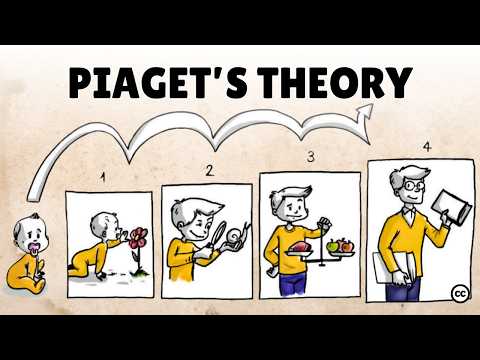
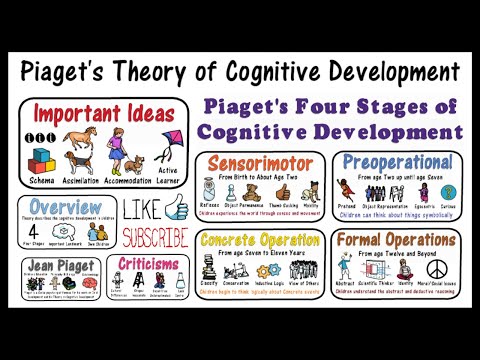
One of the big names in this area is Jean Piaget. He developed a theory that outlines stages of cognitive development. According to him, kids go through four main stages:
- Sensorimotor Stage: This lasts from birth to about two years old. Babies learn through their senses and actions. They don’t have a sense of object permanence yet. So when you play peekaboo, they actually think you’re gone!
- Preoperational Stage: Happening roughly between ages two and seven, this stage is all about imagination! Kids can talk and think symbolically but struggle with logic and understanding other perspectives.
- Concrete Operational Stage: From around age seven to eleven, children start thinking logically about concrete events but have trouble with abstract concepts. They get better at understanding rules and can classify objects more effectively.
- Formal Operational Stage: Beginning around age twelve, this is when kids develop the ability for abstract thought. They can solve problems systematically and think more critically.
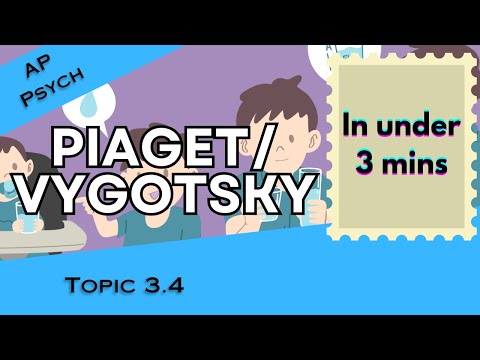
Another fascinating framework comes from Lev Vygotsky. He placed a greater emphasis on social interaction as crucial for cognitive development. His concept of the ZPD (Zone of Proximal Development) highlights that there’s a gap between what a learner can do alone versus what they can do with help. Think about tutoring! You might struggle with algebra on your own but get it quickly when someone explains it to you.
Then there’s the idea from Information Processing Theory, which compares human cognition to how computers work. It suggests that our brains process information in steps: encoding, storage, and retrieval. So when you study for an exam, you’re essentially encoding that info into your memory so you can recall it later.
And let’s not forget about Cognitive Load Theory. This one focuses on how much information your brain can handle at once during learning activities. If it gets too overwhelming? Well, retention goes down! It’s like trying to carry too many groceries; eventually some bags are going to drop!
It’s intriguing how these theories link together yet offer different perspectives on learning and growth. While Piaget helps us understand the stages we typically go through, Vygotsky reminds us how vital social context is in shaping our minds.
So next time you’re working on something tricky or teaching someone else? Keep these theories in mind! Understanding that everyone develops differently based on experiences can really change how we approach learning—both for ourselves and others around us.
Exploring the Key Psychologist Behind Cognitive Development Theory
So, if you’ve ever looked into the way kids learn and grow, you might have stumbled across someone named Jean Piaget. He’s kind of a big deal when it comes to understanding cognitive development. His theories really laid the groundwork for how we think about how children develop their understanding of the world.
Piaget believed that kids aren’t just little adults—they actually think differently. He broke down cognitive development into four stages. Here’s a quick look at them:
- Sensorimotor Stage (0-2 years): This is when babies explore the world using their senses and motor skills. They learn about things by touching, seeing, and moving around.
- Preoperational Stage (2-7 years): At this point, kids start to use language and engage in pretend play. Their thinking is still a bit egocentric; they have trouble seeing things from other people’s perspectives.
- Concrete Operational Stage (7-11 years): Kids begin to think logically about concrete events. They understand the concept of conservation—like knowing that a tall glass with less juice can hold the same amount as a shorter glass.
- Formal Operational Stage (12 years and up): In this stage, thinking becomes abstract, and adolescents can solve hypothetical problems. They’re starting to think about future possibilities!
So, what makes Piaget so important? Well, he showed that children actively construct their own understanding through experiences rather than just soaking up knowledge like sponges. It’s like building a Lego structure; you put pieces together based on what you already know while also experimenting with new ideas.
Here’s an example: Imagine a toddler learning what happens when they drop something off a table. At first, they might just be curious about it falling. But over time—a lot of falls later—they realize it happens every time! This “aha” moment is part of developing their understanding of cause and effect.
Now let’s talk about his idea of schemas. These are mental models or frameworks that help us organize knowledge. So when your brain updates its “schema” for dogs after meeting different breeds or sizes—like realizing that not all dogs are tiny yappy ones—you’re basically reshaping how you categorize stuff based on experience.
Piaget’s work didn’t just stop with kids, either! His theories influenced education too. Teachers started focusing on guiding children through exploration rather than merely lecturing them—kind of like being more of a coach than just telling them what to do.
Despite his impact, not everyone agrees with him completely. Some critics argue he underestimated younger children’s abilities or didn’t take cultural factors into account enough. But hey, that’s science for ya—it keeps evolving!
So next time you see a child playing or exploring their world in their unique way, remember Jean Piaget! His work helps us appreciate how rich and dynamic cognitive development really is—you know?
Exploring Piaget’s Four Stages of Cognitive Development: A Comprehensive Guide
Cognitive development is a fascinating topic that dives into how our brains grow and change as we age. One of the big names in this field is Jean Piaget, who came up with a theory that explains how kids think and learn differently at various ages. His ideas are grouped into four distinct stages. Let’s get right into them.
1. Sensorimotor Stage (Birth to 2 years)
In this stage, infants learn through their senses and actions. Basically, they explore the world by touching, seeing, hearing, and sucking on things. It’s all about direct experiences!
For example, imagine a baby playing with a rattle. When they shake it, they hear the noise and feel the vibrations. It’s simple but crucial! They start to realize that their actions can cause things to happen in the environment around them.
Children also develop something called object permanence during this time. That means they understand that objects continue to exist even when they can’t see them. So if you hide a toy under a blanket, they’ll look for it eventually. Before they hit this milestone, if they can’t see it, it’s like it just vanished!
2. Preoperational Stage (2 to 7 years)
Now we’re moving on to the fun part! Kids become increasingly verbal and begin using symbols. They start playing pretend games—like being superheroes or running a store—which helps them practice their imagination.
But here’s where it gets interesting: kids in this stage are not yet great at logical thinking or understanding other people’s perspectives. They’re super egocentric! For instance, if you ask a child what another person sees from their viewpoint, they might only describe what *they* see.
Also, during this stage, kids believe in magical explanations for events—like thinking that the moon follows them when they’re outside playing.
3. Concrete Operational Stage (7 to 11 years)
Things shift gears as children enter this stage! They start thinking more logically about concrete events and can perform operations mentally rather than just physically manipulating objects.
Take math for example; kids begin to grasp concepts like addition and subtraction more easily than before! They also develop conservation, which means understanding that quantity doesn’t change even when its shape does—like knowing that liquid in different shapes is still the same amount.
However, their logical thinking is still pretty tied to specific examples; abstract concepts can be tough for them until they’ve fully moved on.
4. Formal Operational Stage (12 years and up)
Now we’re talking about teenagers who can think abstractly! In this stage, individuals begin to reason hypothetically and use deductive reasoning skills.
So let’s say you present them with a problem or scenario (think about complex math problems or scientific theories). They can formulate hypotheses and test them more effectively now compared to earlier stages!
They also become more capable of moral reasoning—discussing right versus wrong becomes much richer here!
To sum up,
- The Four Stages:
- Sensorimotor: Learning through senses; object permanence develops.
- Preoperational: Symbolic thinking; egocentrism is high.
- Concrete Operational: Logical thinking about real-life situations.
- Formal Operational: Abstract reasoning emerges; hypothetical thinking kicks in.
Piaget’s work offers incredible insights into how children’s minds evolve over time—not just academically but emotionally too! It highlights how important each of these stages is for childhood development overall.
Cognitive Development Theory is one of those fascinating topics in psychology that can really make you think about how we grow and change over time. You know, when we’re kids, the way we see the world is just… different. I remember my little cousin, who was around three years old at the time, trying to understand why his toy car wouldn’t fit in a rectangular box. He kept pushing it in, getting frustrated, and then suddenly he pointed out that the car was round and the box was not. It was like watching a light switch flip on in his mind!
Now, this brings us to this brilliant guy named Jean Piaget. He came up with this theory that explains how our thinking evolves as we age. His theory divides cognitive development into stages: sensorimotor, preoperational, concrete operational, and formal operational. Each stage marks a shift in how we process information and understand the world around us.
You start with the sensorimotor stage when you’re just a baby. During this phase, you explore your environment through your senses—touching everything within reach and tasting anything you can get your hands on! Here’s where kids learn that objects exist even when they’re not visible (like when you hide a toy under a blanket). It’s wild to think about how foundational these little moments are.
Then there’s the preoperational stage—think of kids like my cousin—who start using words and images but aren’t quite ready for logical thinking yet. They often see things only from their perspective; it’s like they’re wearing blinders. They may struggle with concepts like conservation (the idea that quantity doesn’t change even if its shape does). Water in a tall glass vs. water in a wide glass? For them, it’s all about looks!
As they grow into the concrete operational stage, they develop more logical thinking skills but still need hands-on experiences to grasp more complex concepts. That’s when they can finally wrap their heads around things like reversibility—understanding that actions can be reversed.
Finally comes the formal operational stage—a place where abstract thought flourishes! Here’s where teenagers start pondering life’s big questions (you know what I mean?) and forming hypotheses about various scenarios.
It’s pretty amazing to see how cognitive development shapes everything from problem-solving to social interactions as you grow up! Sometimes I wonder if adults realize how crucial these early experiences are for laying down the groundwork for future learning and understanding.
So yeah, Piaget’s insights remind us that learning isn’t just about hitting books or crunching numbers; it’s really about how our minds evolve through stages of natural curiosity and understanding of the world. And realizing this helps appreciate both childhood innocence and intellectual growth throughout life—not just as kids but as lifelong learners too!