You know how we all think differently as we grow up? It’s pretty wild, right? Jean Piaget had this whole theory on how our brains develop in stages.
Basically, he believed that kids don’t just magically get smarter. They go through specific phases where they grasp the world in unique ways. Each stage is like a building block, leading to the next level of understanding.
Like, have you ever watched a toddler trying to figure out why a ball rolls away? They’re making sense of their surroundings in ways that are totally different from how you or I would. It’s kinda cool when you think about it!
So let’s break down those stages and see how Piaget’s ideas can help us appreciate the way we all learn and grow.
Understanding Piaget’s Theory of Cognitive Development: Insights for A-Level Psychology Students
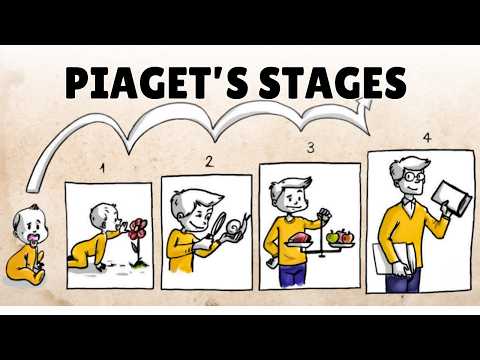
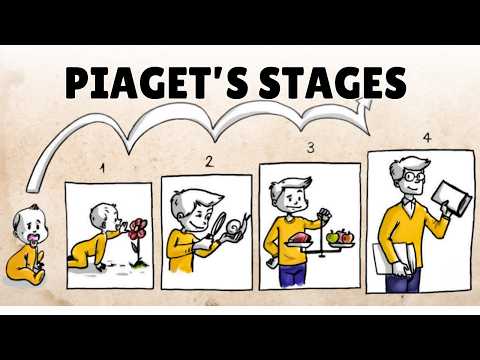
Piaget’s theory of cognitive development is all about how kids learn and grow mentally. It’s pretty fascinating stuff! Basically, he broke down the process into four stages. Each stage shows a different way of thinking as kids get older. Let me break it down for you:
1. Sensorimotor Stage (0-2 years): This is where babies explore the world through their senses. They learn about the environment by touching, looking, and listening. A cool thing here is **object permanence**. At first, when you hide a toy under a blanket, they think it’s gone forever! But by about 8 months, they start to understand that things still exist even when they can’t see them.
2. Preoperational Stage (2-7 years): Here, kids start using language and engage in pretend play. Their thinking is pretty intuitive but also limited. They might struggle with understanding other people’s perspectives, which is called **egocentrism**—like when a kid covers their eyes during hide-and-seek thinking if they can’t see you, you can’t see them either! They also might think that taller glasses hold more juice even if both hold the same amount—that’s called **centration**.
3. Concrete Operational Stage (7-11 years): This stage marks a significant leap in logical thinking! Kids begin to reason logically about concrete events and understand the concept of conservation—like realizing that the amount of liquid doesn’t change just because it’s poured into another container. They’re still pretty tied to physical objects and practical experiences though; abstract thinking isn’t quite there yet.
4. Formal Operational Stage (12 years and up): Now we’re talking about mature reasoning! Teens can think abstractly and logically plan for the future or discuss hypothetical situations—think algebra or philosophical debates! This stage opens up possibilities for systematic problem solving and critical thinking.
So why does this matter? Understanding these stages helps A-Level students grasp how children develop cognitively at different ages. It’s not just theory; it gives insight into teaching methods or even parenting styles!
Piaget’s work challenges us to recognize that every child’s mind develops at its own pace through these stages—a reminder that development isn’t one-size-fits-all! The real takeaway? As educators or future psychologists, knowing Piaget can help shape learning environments tailored to where kids are in their cognitive journey.
In summary, Piaget’s theory highlights how children evolve from sensory experiences to abstract reasoning over time—and isn’t that kind of amazing?
Understanding the 4 Stages of Development in Psychology: A Comprehensive Guide
The four stages of cognitive development, as outlined by Jean Piaget, are super interesting. Understanding these stages can really give you insight into how kids think and learn, which is like a peek into their ever-evolving minds. So let’s break it down, shall we?
1. Sensorimotor Stage (Birth to 2 years)
During this first stage, babies are basically little explorers using their senses to understand the world around them. They learn through touch, sight, sound, and taste. That’s why you often see infants grabbing everything within reach. They’re figuring things out! A significant milestone in this stage is achieving object permanence. This means they start to understand that objects still exist even when they can’t see them anymore. Ever played peek-a-boo? Yeah, that’s a game rooted in this concept!
2. Preoperational Stage (2 to 7 years)
Now we’ve got toddlers who are starting to play pretend! In this stage, they begin using words and pictures to represent their ideas. But here’s the kicker—they’re still pretty egocentric; they struggle to see things from someone else’s perspective. Like if a child sees the world through their own eyes only—they might think everyone else thinks like them too! Think about that moment when your kid insists that their favorite toy must be everyone’s favorite because it’s theirs!
3. Concrete Operational Stage (7 to 11 years)
In the concrete operational stage, kids start thinking more logically but usually regarding concrete events or objects rather than abstract concepts. They grasp concepts like conservation, meaning they realize that quantity doesn’t change even if its shape does—so if you pour juice from a tall glass into a short one, they’ll get that there’s still the same amount of juice! This ability helps them tackle school subjects better because they can handle tasks involving sorting or organizing things.
4. Formal Operational Stage (12 years and up)
This final stage marks the beginnings of abstract thinking and problem-solving skills! Teens can now think about hypothetical scenarios and use deductive reasoning—like saying if “A equals B” then “B must equal A.” Remember those late-night discussions you’d have as a teen about life or philosophy? Well, that’s your formal operational brain at work!
So yeah, Piaget’s stages really serve as guideposts for understanding how kids grow and change cognitively over time. Just like any journey in life, each child’s path might look a bit different depending on experiences but these stages offer an interesting framework for seeing how thinking matures as kids become adults!
Understanding Cognitive Development: Key Stages and Characteristics Explained
Cognitive development is like a roadmap of how our thinking evolves as we grow. One of the most well-known theories about this is from Jean Piaget, a Swiss psychologist who spent years studying how kids learn and think. He came up with a series of stages that describe how our ability to understand the world changes over time. So, let’s break this down into key stages and characteristics.
The Sensorimotor Stage (Birth to 2 years)
In this first stage, babies are little explorers. They learn about their world mainly through their senses and actions. Think about this: when a baby shakes a rattle, they’re not just making noise—they’re figuring out cause and effect! They’re also developing **object permanence**, which is when they start to realize that things still exist even if they can’t see them anymore. Like when you hide their favorite toy under a blanket, and they might start looking for it.
The Preoperational Stage (2 to 7 years)
Next up is the preoperational stage, where imagination runs wild! Children begin to use words and images but still struggle with logic. You’ll notice they might focus on one aspect of something while ignoring others—like being super obsessed with the color of their juice rather than its taste. This stage also includes **egocentrism**, meaning kids have difficulty seeing things from another person’s perspective. Picture your kid playing hide-and-seek: if they can’t see you, they think you can’t see them either!
The Concrete Operational Stage (7 to 11 years)
Then comes concrete operational thinking. Children start to use logic but mainly with concrete information—things they can touch or experience directly. They grasp concepts like **conservation**, which means understanding that quantity doesn’t change even if the shape does (like squishing play-dough). Math skills really kick in here too, as kids begin solving problems with actual objects or visuals instead of just imagining situations.
The Formal Operational Stage (12 years and up)
Finally, we hit the formal operational stage where abstract thinking takes off! Teens develop the ability to think logically about hypothetical situations. They can ponder big ideas like love or justice without needing something tangible in front of them. You might catch them discussing moral dilemmas or debating future possibilities—this signifies their growing capacity for complex thought processes.
So, these four stages paint a pretty clear picture of cognitive development in children according to Piaget’s theory. Recognizing these phases can help us understand how kids learn and interact with their world. It’s eye-opening when you see the shifts in their thinking as they age—it’s all part of growing up!
So, you know how we often think about how kids learn and grow? Well, Jean Piaget had some pretty interesting ideas about this whole process. His theory on cognitive development breaks it down into stages that describe how our thinking evolves from childhood to early adulthood.
Let me share a little story that kinda illustrates this. I remember watching my niece when she was around three years old. She was totally fascinated by a box of crayons. She would scribble all over the paper, just enjoying the colors without much thought about what they meant. Then, fast-forward a few years, and she started drawing recognizable shapes—like stick figures! It was like watching her brain unlock a new level of understanding.
That’s essentially what Piaget talked about with his four stages: sensorimotor, preoperational, concrete operational, and formal operational.
In the **sensorimotor stage**, which lasts from birth to about two years old, babies learn through their senses and movements. They explore everything by touching and tasting—everything’s a new adventure! It’s all about experiencing the world directly.
Once they hit around two to seven years old, they step into the **preoperational stage**. This is where things get really imaginative! Kids start to think symbolically and use language more creatively. Remember that scribbling I mentioned? That’s right in line with this stage; they’re not just drawing—they’re expressing ideas in ways that might not make sense to adults.
Then comes the **concrete operational stage**, which runs from about seven to eleven years old. Here’s where kids can start thinking logically but still need concrete examples to understand complex concepts. So if you give them a math problem involving apples or oranges—they can grasp it easily—but abstract math? Not yet!
Finally, there’s the **formal operational stage**, beginning around age twelve and lasting into adulthood. This is when abstract thinking kicks in full gear! It’s like flipping on a switch—suddenly they’re able to think about hypothetical situations or philosophical questions.
It’s pretty crazy when you think about it! Each phase builds on the previous one; like layers of an onion—or maybe more like levels in a video game? Each stage comes with its own set of challenges but also opens up new ways of understanding our world and ourselves.
So yeah, Piaget’s theory gives us some cool insights into how our minds work as we grow up. It’s almost like he created a roadmap for understanding childhood development—and hey, it helps us see why kids act the way they do at different ages!