Hey! So, let’s chat about something super cool—psychology. You know, that thing that tries to figure out why we do the stuff we do?
Well, psychology isn’t just about sitting on a couch and talking. There’s a whole world of experimental design behind it. Seriously, it’s like the secret sauce that makes understanding the mind so much more fun!
Imagine scientists setting up real-life experiments to test ideas. It’s like being a kid in a candy store, but instead of sugar rushes, you get insights into human behavior.
We’re talking innovative approaches that flip traditional thinking on its head. It’s all about creativity mixed with science. Sounds intriguing, right? Let’s dig deeper and see what these fresh ideas can really teach us!
Understanding Experimental Design in Psychology: Key Examples and Applications
Understanding experimental design in psychology is kind of like setting up a cool science project. Seriously, it’s all about figuring out how to collect data that can help understand behavior and mental processes. So, let’s break this down.
What is Experimental Design?
At its core, experimental design is a method used by psychologists to test hypotheses. You’re basically trying to figure out if one thing (like a treatment) causes changes in another thing (like behavior). This often involves manipulating variables in a controlled setting.
Key Components
There are some essential parts of experimental design you need to know:
- Independent Variable (IV): This is what you change. For example, if you’re testing the effects of sleep on memory, the amount of sleep participants get is your IV.
- Dependent Variable (DV): This is what you measure. In our sleep study, it could be how well participants remember a list of words.
- Control Group: This group doesn’t get the treatment or change you’re testing. They help researchers see if the changes really come from the IV.
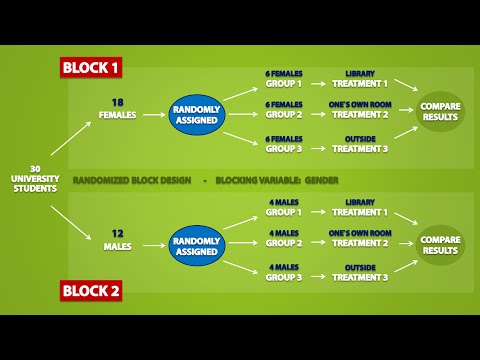
- Random Assignment: Participants should be assigned to groups randomly. This helps make sure that any differences between groups aren’t just due to chance.
Example: The Stanford Prison Experiment
One famous study often brought up when talking about experimental design is the Stanford Prison Experiment by Philip Zimbardo. In this case, college students were randomly assigned as either guards or prisoners. The setup aimed to see how situations influence behavior. It’s a tough example because while it showed something important—how power dynamics can affect behavior—it also raised serious ethical questions.
The Importance of Ethical Considerations
Speaking of ethics, this part can’t be ignored. Researchers must consider how their studies affect participants’ well-being. That’s why today we have strict guidelines ensuring that no harm comes to individuals involved in research.
Applications in the Real World
So why does all this matter? Well, experimental design isn’t just for research papers; it has real-world applications! For instance:
- Treatment Effectiveness: Studies using experimental designs help evaluate how effective new therapies are for mental health conditions.
- E-learning: Psychologists might test different ways to teach people and see which methods lead to better learning outcomes.
- Workplace Dynamics: Companies might experiment with different work environments to find out what boosts employee motivation and productivity.
It’s pretty neat how these studies can shape everyday life!
In short, understanding experimental design gives us a powerful toolset for exploring human thoughts and behaviors more precisely. It’s like having a map through complex psychological landscapes—leading us toward insights that could make life better for everyone!
Exploring the 4 Types of Experiments in Psychology: A Comprehensive Guide
Exploring experiments in psychology can feel a bit like peeling an onion—you keep discovering more layers, right? Basically, researchers use different types of experiments to understand how people think, feel, and behave. Let’s break down the quatro types of experiments you might come across:
- Descriptive Experiments:
These don’t involve manipulation like some other types do. Instead, they’re all about observing and gathering data on behavior without changing anything. You might conduct surveys or case studies to gather insights into people’s actions and thoughts. For instance, if you wanted to see how many people eat breakfast daily, you’d just ask them directly without trying to change their habits.
- Correlational Experiments:
Now, these are a bit different because they look at relationships between variables. But here’s the catch: just because two things are related doesn’t mean one causes the other! Say you notice that students who study late at night tend to get higher grades. You might think studying late helps with grades, but maybe those who study late are also more motivated overall. It’s like a dance—sometimes it looks coordinated but really could just be happenstance.
- Quasi-Experimental Designs:
In quasi-experiments, you get a bit more hands-on without fully randomizing participants into groups. This is often used when it’s not possible or ethical to randomly assign people—like if you’re studying the effects of smoking on health; it wouldn’t be cool to make some folks smoke for the experiment! Instead, you might compare smokers with non-smokers and look for differences in health outcomes. It gives you valuable insights even if it’s not as controlled as other designs.
- True Experiments:
True experiments are like the gold standard in research! Here’s where you randomly assign participants into groups—let’s say one group gets a new teaching method while another uses the old one—to see which works better for learning outcomes. This setup helps eliminate bias and increases reliability since every participant has an equal chance of being assigned to either group.
So there you have it! Each type plays its role in helping psychologists understand human behavior from different angles and contexts. The overall takeaway? The way researchers design their studies influences what we can learn about ourselves as humans!
Understanding the Experimental Approach in Psychology: Key Concepts and Applications
The experimental approach in psychology is pretty fascinating. It’s like being a detective, but instead of solving crimes, you’re trying to figure out how people think, feel, and behave. The goal is to look at cause-and-effect relationships by manipulating variables in controlled settings. This helps researchers understand how different factors influence behavior.
Key Concepts of the Experimental Approach
One of the main ideas here is the concept of independent and dependent variables. The independent variable is what you change in an experiment. For example, think about a study that looks at how sleep affects memory. You might change the amount of sleep participants get—this is your independent variable. On the other hand, the dependent variable is what you measure or observe—in this case, it could be how well they remember a list of words after sleeping for different amounts of time.
Another important part of this approach is control groups. They help researchers compare outcomes against a group that doesn’t receive any treatment or manipulation. Imagine you’re testing a new study strategy for students; one group uses it while another just studies like usual. By comparing results between these groups, researchers can see if the new method really makes a difference.
Random assignment is also crucial in experimental design. This means randomly putting participants into different groups to ensure that each participant has an equal chance of being assigned to any condition in the experiment. It helps eliminate bias and makes your results more reliable—it’s sort of like flipping a coin.
Applications in Real Life
You might be wondering where all this stuff actually matters outside of textbooks! Well, there are tons of places where experimental psychology plays a role:
- Clinical Psychology: Researchers often conduct experiments to test new treatments for mental health issues.
- Educational Settings: Experiments on teaching methods can lead to better ways to help students learn.
- Consumer Behavior: Companies use experiments to see how different advertising strategies influence purchases.
Take clinical psychology as an example: Imagine there’s a new therapy technique designed for anxiety. By using an experimental design with one group receiving the therapy and another not receiving anything (the control group), researchers can see if there’s a marked improvement in anxiety levels among those who participated in therapy compared to those who didn’t.
In education, consider this: A school might want to know if using interactive technology enhances student learning more than traditional lectures do. By running an experiment with one class using tech while another sticks with lectures, educators can gather concrete data on which method works better.
So yeah, understanding this approach gives you insight into not just human behavior but also practical applications that can really make life better! It’s all about knowing *why* things happen and *how* we can use that knowledge effectively. That’s powerful stuff!
You know, when we think about psychology, we often picture therapists sitting with clients in cozy rooms. But there’s a whole different side to the field that’s just as fascinating—experimental design! This is where things get really interesting. It’s all about using creativity to dig deeper into understanding the human mind.
Take, for example, those classic studies where researchers set up quirky experiments to test our behavior. Remember the famous “Stanford prison experiment”? Yeah, it wasn’t just wild; it opened a ton of discussions about power dynamics and human nature. What strikes me is how these experimental setups can push boundaries and reveal insights that surveys or interviews sometimes can’t.
I once read an experiment involving distraction and concentration. Researchers had people try to solve puzzles while, like, listening to annoying noises or wearing weird goggles. Just picture it! The chaos from that setup opened up conversations about multitasking and focus. Crazy how something so out there can highlight everyday struggles, right?
And let’s not forget technology—it’s revolutionizing how experiments are designed nowadays. Virtual reality is stepping in big time! Imagine getting the chance to experience anxiety-inducing situations in a safe environment while researchers closely monitor reactions. It’s innovative and feels like we’re stepping straight into sci-fi territory.
But with these cool new methods comes responsibility too. There are ethics involved in experimenting on humans—seriously important stuff! Consent isn’t just a formality; it’s crucial for respecting participants’ rights and well-being.
So, thinking about all this makes you realize how dynamic psychology really is. It’s evolving with every new approach and study design. Makes you want to jump in and be part of those conversations, doesn’t it? It gives us a unique perspective on ourselves—reminds us that there’s so much more beneath the surface of our everyday experiences if we’re willing to explore it through innovative lenses.