You know, personality is such a funny thing. We all have our quirks, right? Some of us are loud and boisterous, while others just chill in the corner. But what if I told you there’s a way to break it down?
So, here comes Eysenck, a guy who had some wild ideas about how we can categorize these traits. Seriously, he looked at personality like a science experiment!
Think of it as mapping out the different parts of who we are. It’s like figuring out your own psychological GPS! You curious yet? Let’s unravel this together!
Understanding Eysenck’s Model of Personality Traits: A Comprehensive Overview
Eysenck’s model of personality is pretty interesting, like, you know? It’s one of those things that helps us understand why we act the way we do. So, let’s break it down.
Three Main Dimensions
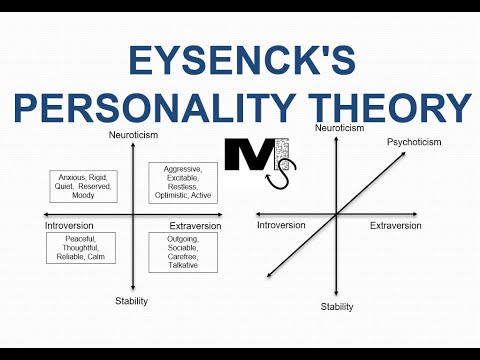
At the core of Eysenck’s theory are three main dimensions of personality traits: extraversion, neuroticism, and psychoticism. Each one plays a role in defining how we behave.
- Extraversion: This is all about how sociable you are. Extraverts tend to be outgoing and lively. They thrive in social situations. Think about that friend who lights up the room as soon as they walk in!
- Neuroticism: This dimension measures emotional stability. High neuroticism means you might often experience anxiety or mood swings. Like that moment when you stress over a small test more than anyone else does—yup, that could be your neurotic side showing.
- Psychoiticism: This one’s a bit different. It looks at aggression and interpersonal relationships. High scores here could indicate someone who may be more prone to antisocial behavior or have difficulty connecting with others.
The Biological Factor
Eysenck believed biology plays a huge part in these traits. He thought our personalities largely come from our biological makeup—and he wasn’t just guessing! He used studies on introverts and extraverts to show how they respond differently to stimuli like noise or caffeine.
For instance, introverts might feel overwhelmed by loud parties while extraverts are energized by them! It’s like being at the same party but having totally different experiences based on your personality.
The 2-Order Factor Structure
What’s cool about Eysenck’s model is it has a two-order factor structure. This means that while there are those big three traits, there are also narrower traits under them. For example, under extraversion might fall sociability and liveliness. If you’re high on sociability but low on liveliness, you could enjoy hanging out with people but prefer quieter settings.
On the flip side, if you’re both high in sociability and liveliness? You’re probably the life of every gathering!
The Assessment Tool: Eysenck Personality Questionnaire
To measure these traits, Eysenck developed something called the Eysenck Personality Questionnaire (EPQ). It can help identify where you lie on these dimensions through a series of questions about your behavior and feelings.
Imagine answering questions like “Do you enjoy meeting new people?” or “Do minor nuisances make you angry quickly?” It gives an insight into your personality profile based on those three big dimensions.
The Impact Over Time
Eysenck’s work has had a long-lasting influence on psychology! Many theories today still reference his ideas about personality structure and measurements. It’s fascinating how little tweaks in our personalities can affect our overall life paths!
So whether you’re an extroverted social butterfly or someone who needs their downtime after every interaction, understanding these traits helps make sense of our everyday experiences—but keep in mind everyone is unique!
In short, Eysenck’s model offers a framework for thinking about your behavior and emotions while grounding it all in biology—how neat is that?
The Impact of Hans Eysenck on Personality Psychology: A Comprehensive Analysis
Personality psychology has this interesting character named Hans Eysenck. His work totally shook things up back in the day. He’s best known for creating a model of personality that focuses on just three main traits: extraversion, neuroticism, and psychoticism. These are pretty core dimensions that explain how people behave, think, and feel, which is why he’s still talked about today.
Eysenck believed that personality traits were linked to our biology. You might be wondering how that works, right? Well, he suggested that our nervous system plays a big role in shaping these characteristics. For example:
- Extraversion: If you’re high on this trait, you tend to be outgoing and sociable. Eysenck argued this might be due to your brain’s arousal levels.
- Neuroticism: This one relates to emotional instability. Those who score high may face anxiety or mood swings because their nervous systems are more reactive.
- Psychoticism: This trait reflects aggression and interpersonal hostility—think of it as the dark side of personality.
What’s really cool is Eysenck didn’t just stop at theory; he developed assessments to measure these traits too! His Eysenck Personality Questionnaire (EPQ) allowed people to see where they fall on each dimension—sort of like finding out what kind of flavor ice cream you’re most like, ya know?
Now, keep in mind that his model isn’t without critics. Some psychologists argue it’s overly simplistic—like trying to capture a huge landscape with just a small sketch. But hey, simplicity can sometimes help us understand complex things better.
To give you an idea about practical impact: Eysenck’s ideas helped pave the way for research into personality types in various fields—not just psychology but even in business settings when hiring or team building.
His influence didn’t stop with his own theories either; it opened doors to studying how personality impacts everything from relationships to mental health. Like how someone who’s high in neuroticism might have different coping strategies than someone low on neuroticism.
In short, Eysenck’s contributions are like the foundation stones for modern personality psychology. While his approach may seem dated or limited at times, it still sparks conversations and research today. And honestly? That says a lot about someone who basically kicked off an entire dialogue about understanding who we are as individuals!
Understanding Eysenck’s Three Super Traits: A Comprehensive Overview of Personality Dimensions
Alright, let’s break down Eysenck’s model of personality, which is pretty interesting if you think about it. This guy, Hans Eysenck, was one of the first to suggest that our personalities can really be understood through some big categories. He called these categories **super traits**. Super traits are like broad dimensions that help us understand who we are and how we behave.
So, basically, Eysenck identified three main super traits: **Extraversion**, **Neuroticism**, and **Psychoticism**. Each of these traits has a different vibe and represents different aspects of our personality. Let’s unpack each one a bit.
Extraversion refers to how outgoing or reserved someone is. If you’re an extrovert, you’re probably the life of the party, loving social interactions and feeling energized around people. On the flip side, introverts tend to recharge by spending time alone and might prefer quieter settings.
Neuroticism, on the other hand, relates to emotional stability. If you’re high in neuroticism, you might experience more anxiety and mood swings. It can mean feeling stressed or worried a lot—think about those moments when everything feels overwhelming! In contrast, people low in neuroticism are often more emotionally stable and resilient.
Now onto Psychoticism. This one’s a bit unique; it’s about how tough or sensitive someone is emotionally. People who score high on psychoticism may be more aggressive or impulsive; they might have difficulty with empathy. People low in this trait tend to be more cooperative and nurturing.
Let’s say you meet two friends at a gathering: one is super chatty (extrovert), always cracking jokes (low neuroticism), while the other is calm but also tends to withdraw when things get too loud (introvert) and can stress out easily (high neuroticism). Meanwhile, if another friend gets really intense about debates and doesn’t seem to care about others’ feelings too much (high psychoticism), it gives you an idea of how these traits can play out in real life.
When you think about it this way—rather than slapping labels on people—you start to see personality as a spectrum that can help us connect better with others. It reminds me of how easy it is to misread someone who’s quiet in social settings; they might just be introverted rather than unfriendly!
Eysenck’s three super traits show us that personality isn’t just one thing but rather a mix of different styles we all express in various ways. By understanding these dimensions, we get greater insight into our behaviors and those around us!
Eysenck’s model of personality is one of those things that really gets you thinking about how we all tick differently. It’s like, why do some people just naturally seem to be the life of the party while others prefer a cozy night in with a good book? Hans Eysenck had this wild idea that our personalities could be boiled down into three main dimensions: extraversion, neuroticism, and psychoticism. You can kinda see how these categories shape our day-to-day lives, right?
Let’s take a second to break it down. Extraversion is pretty straightforward—think talkative and energetic versus reserved and reflective. You know that friend who’s always up for going out? That’s your classic extravert! On the flip side, neuroticism relates to emotional stability; if you’re more prone to anxiety or mood swings, you’re likely higher on that scale. And then there’s psychoticism, which sounds way scarier than it actually is—it deals with how tough or sensitive someone is emotionally.
I remember back in school, there was this girl in my class who was super outgoing. She’d chat with everyone and make friends easily. Meanwhile, I was more on the quiet side, often sitting back and observing before joining in conversations. It wasn’t like I didn’t want to engage; I just processed things differently. That’s where Eysenck’s ideas come into play! They explain why we approach social interactions in such different ways based on these traits.
What’s cool about Eysenck’s model is it makes you think about how we can complement each other as individuals. Maybe being a bit neurotic helps you notice details others miss or keeps you prepared for challenges ahead. And hey, without those outgoing types to lift our spirits sometimes, life would probably feel a whole lot duller.
Ultimately, Eysenck reminds us that personality isn’t just black and white—it’s this big colorful spectrum of traits that makes each of us unique. So whether you’re bouncing off the walls or taking time to recharge quietly on your own couch, it all plays into this fascinating puzzle of human behavior. It goes to show: there’s no one-size-fits-all when it comes to understanding why we are who we are!