Alright, let’s chat about something really interesting. You know how we all have our quirks and ways of reacting to stuff? That’s where personality comes in!
Ever heard of Eysenck’s Personality Inventory? It’s a cool tool that dives into those traits that make you, well, you!
Imagine getting a peek into how your mind works. Pretty neat, huh? It can help you understand why you behave a certain way or why some things just grind your gears.
So, whether you’re curious about yourself or trying to understand your buddies better, this is worth checking out. Trust me on this one!
The Impact of Hans Eysenck on the Evolution of Personality Psychology
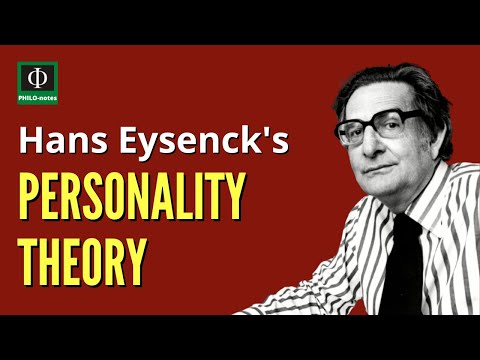
Eysenck was a pretty significant figure in personality psychology. His work laid down some serious groundwork that shaped how we think about personality traits today. You might’ve heard of his theory that personality can be boiled down to just three main dimensions: Extraversion, Neuroticism, and Psychoticism. It’s like he simplified this big, complex field into something more manageable.
Extraversion is really about where you get your energy from. Are you social and outgoing? Or do you prefer the quiet of solitude? Eysenck believed that extraverts are more lively and energetic, while introverts tend to be more reserved and thoughtful. This distinction helps us understand why some folks thrive in big groups while others might feel drained.
Then there’s Neuroticism. Basically, it deals with emotional stability. High neuroticism means someone is often anxious or moody, whereas low neuroticism usually points to a person who’s more calm and stable emotionally. It gives insight into how people deal with stress or emotional challenges in life.
As for Psychoticism, it’s a bit different. This trait reflects aggressiveness and interpersonal hostility. People scoring high on this scale can be impulsive or even antisocial at times, whereas those with lower scores tend to be more empathetic and socially aware.
Eysenck wasn’t just throwing out random ideas; he developed the **Eysenck Personality Inventory** (EPI) to measure these traits effectively. Through this tool, individuals could assess where they fit within these dimensions—like taking a fun quiz but way deeper than that!
His work has had lasting influence because it paved the way for future research on personality traits. Many later theories built upon his ideas or contrasted with them. Researchers started creating their own models based on his dimensions but added new layers too.
You know what else is fascinating? Eysenck was all about looking at biological factors affecting personality as well! He believed genetics played a role—suggesting our personalities could stem partly from our biological make-up. That raised eyebrows and sparked debates in psychology circles about nature versus nurture for years!
His influence can still be seen today—in personality tests used in various settings from workplaces to therapy sessions. Plus, understanding these traits helps in personal growth too; it encourages self-awareness which can lead you to better interactions with others.
So yeah, Hans Eysenck’s legacy in personality psychology is enormous! He took complex human behaviors and distilled them into understandable frameworks that still resonate today.
Understanding Eysenck’s Theory of Personality: Key Concepts and Implications
Eysenck’s theory of personality is all about understanding the different traits that shape how we think and behave. Basically, he proposed that our personalities can be boiled down to three main dimensions: **extraversion**, **neuroticism**, and **psychoticism**. Each of these traits represents a spectrum where you can find your unique spot.
Extraversion is about how much energy you get from being around people. If you’re more on the extraverted side, you probably thrive in social settings and feel energized after hanging out with friends. On the flip side, introverts might prefer quieter environments and need some alone time to recharge.
Then there’s neuroticism, which deals with emotional stability. If you’re high in neuroticism, you might find yourself feeling anxious, moody, or easily stressed out. Conversely, those lower in this trait tend to be more calm and even-keeled. It’s like having a little storm cloud following you around versus being able to bask in the sunshine.
Now, psychoticism is a bit trickier. It relates to creativity, impulsivity, and risk-taking behaviors. A person high in psychoticism might be more unconventional or prone to aggressive behaviors, while someone low on this scale tends towards being more compassionate and cooperative.
The cool part? Eysenck developed an assessment tool called the **Eysenck Personality Inventory (EPI)** that helps categorize where individuals fall on these dimensions.
- Extraversion-high: You might be sociable and lively.
- Extraversion-low: You could be reserved and reflective.
- Neuroticism-high: You may struggle with anxiety or emotional ups and downs.
- Neuroticism-low: You likely handle stress well.
- Psycho-high: You might show impulsive or eccentric behavior.
- Psycho-low: You are probably more grounded and agreeable.
You know what’s interesting? Each of us has a unique combo of these traits that dictates how we interact with the world. For example, think about your friend who’s super outgoing—their high extraversion explains why they seem so comfortable at parties! But maybe they also have some neurotic tendencies if they stress out over minor details.
Plus, Eysenck’s work has bigger implications beyond just framing personality traits; it can give insights into mental health too. For instance, understanding where someone falls on the neuroticism scale can help gauge how they cope with stress or anxiety disorders.
What’s great about Eysenck’s framework is its straightforwardness; it simplifies personality into digestible parts without losing sight of individual complexity.Ok maybe it sounds serious—like someone looking at clouds for patterns—but really, it’s just an easy way to make sense of why we all tick differently!
In a nutshell: Eysenck’s theory gives us tools not only to understand ourselves better but also helps enhance our interactions with others by appreciating their unique personalities!
Understanding the Eysenck Personality Inventory: Its Applications and Benefits
The Eysenck Personality Inventory, or EPI for short, is a pretty cool tool in the world of psychology. Developed by Hans Eysenck in the 1950s, it aims to measure personality traits based on two main dimensions: extraversion and neuroticism. But it gets a bit more layered than that, so let’s break it down.
Extraversion is about how outgoing and social you are. If you’re the type who thrives at parties and loves chatting with strangers, then you’re likely high on this scale. On the flip side, if you prefer quiet nights in with a book, you might land closer to introversion.
Then comes neuroticism, which basically measures emotional stability. High scores here might indicate someone who’s more prone to anxiety and mood swings. Low scorers usually feel calm and collected most of the time.
Now, Eysenck added another dimension called psychoticism. This isn’t about being psychotic in a clinical sense; it’s more about how tough-minded or empathetic someone is. People scoring high might be seen as more aggressive or nonconformist, while those on the lower end could be more compassionate and caring.
So why does all this matter? The EPI has several applications that can really help both individuals and professionals:
- Understanding Yourself: Taking this test gives you insight into your own personality traits. It’s like holding up a mirror to your behavioral patterns.
- Career Guidance: Knowing where you stand on these scales can help you make career choices that suit your personality.
- Therapy & Counseling: Therapists often use the EPI to understand their clients better and tailor their approaches.
- Research: Psychologists utilize the EPI in studies which can lead to broader insights about human behavior across various contexts.
Imagine sitting down for coffee with a friend who’s kind of an extrovert—always bubbling with energy. They might pull out their phone one day and show you their EPI results which reveal they’re off-the-charts extroverted! You might think about how those traits affect their relationships or career choices.
But here’s something important: while the EPI gives valuable information, it doesn’t cover every aspect of someone’s personality. Human behavior is super complex! It helps paint a picture but isn’t necessarily an all-encompassing portrait.
In summary, understanding the Eysenck Personality Inventory can be quite enlightening! It opens up paths for self-awareness, guides life choices—and helps professionals get a handle on human behaviors. Just remember that it’s only one piece of a much bigger puzzle when it comes to understanding ourselves and each other!
So, you know how sometimes you meet someone and you just click or, on the flip side, you think, “What on earth is going on with this person?” Well, that whole experience can be partly explained by personality traits. One of the most interesting tools to gauge these traits is Eysenck’s Personality Inventory.
Alright, a little background here. Hans Eysenck was this cool psychologist who thought about personality in a different way. He didn’t just focus on what makes us unique; he looked at dimensions of personality. So he narrowed it down to three major traits: extraversion, neuroticism, and psychoticism. You might be wondering what those fancy terms mean in real life.
Extraversion is all about where you get your energy from. Do you thrive in social situations or prefer the quiet calm of a good book? That’s basically the difference between an extrovert and an introvert. Neuroticism reflects emotional stability — think anxiety levels here. And then psychoticism? It deals with how tough or even aggressive someone might be.
I remember one time being at a party where there was this guy who just wouldn’t stop talking — like he was on a mission to meet everyone there! He buzzed around like a bee, making connections left and right. It struck me as totally extroverted behavior; his energy was contagious! Meanwhile, my friend sat quietly sipping her drink, watching everything unfold with intrigue but only joining in when she felt comfortable. This contrast really highlights these Eysenck traits in action.
Eysenck’s test helps people understand themselves better too. By knowing where they stand on the extraversion-neuroticism scale (and so forth), folks can figure out how they might react in various situations or relate to others. It’s not some magic formula that dictates your fate; instead, it gives hints about tendencies that can come into play during life events or relationships.
But here’s where it gets even more interesting: personality isn’t set in stone! Sure, our traits give us a framework for understanding ourselves but experiences and environments shape us too over time. So imagine taking that inventory years later and seeing how much has shifted — from an anxious wallflower to someone who’s thriving at events because they’ve learned coping skills along the way!
So yeah, Eysenck’s Personality Inventory is like holding up a mirror to our minds; it reflects key aspects of who we are while reminding us that we’re all capable of growth and change.