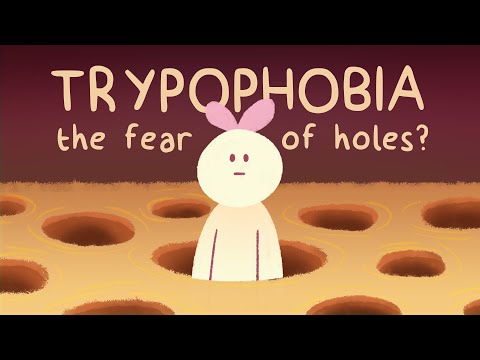
You know those creepy-crawly feelings you get sometimes? Like when you see a hole in something, and it just gives you the heebie-jeebies?
Well, there’s actually a name for that. It’s called trypophobia. And for some folks, it’s more than just uncomfortable; it can mess with their heads big time.
Imagine looking at your hands and feeling this wave of panic hit because of tiny holes or patterns in your skin. Sounds wild, right? But it’s real!
Let’s chat about what goes on in the brain when this kind of fear kicks in. How does something as simple as a hole turn into a full-blown phobia? Buckle up!
Exploring the Psychological Roots of Trypophobia: Understanding Fear of Holes
Trypophobia, the intense discomfort or fear you might feel when seeing clusters of holes or patterns, is one of those really interesting phobias that can catch people off guard. You know, you’re scrolling through social media, and suddenly you see a close-up of a honeycomb or a sponge, and you just feel this wave of unease wash over you. What’s going on there? Let’s break it down.
First off, trypophobia isn’t officially recognized as a formal phobia in many psychological manuals like the DSM-5. But that doesn’t make it any less real for those who experience it! It’s thought to come from an evolutionary response. Some researchers believe our ancestors might have developed this aversion to protect themselves from harmful things in nature—like disease or parasites. If you think about it, things like clusters of holes could hide dangerous creatures.
So, what triggers this phobia? It can vary from person to person. For some, it’s specific patterns like holes in skin (yikes!) or sponges; for others, it could be something more mundane but still unsettling. It’s all about your brain’s interpretation of these images and how they relate to feelings of vulnerability.
- The brain’s reaction: When someone with trypophobia sees these hole patterns, their brain might kick into overdrive. It’s like a red flag goes up saying “Danger!” This can lead to feelings of anxiety—racing heartbeats, sweaty palms—you name it.
- : Many trypophobic triggers are associated with decay or disease—think about the way mold looks on food or the holes in rotten fruit. Your mind naturally connects these images with something negative or gross.
- : For people with this phobia, seeing those cluster patterns might evoke strong feelings—not just fear but also disgust and discomfort. That emotional cocktail makes the experience even more overwhelming.
You might wonder why some people develop this fear while others don’t. Well, there’s definitely a mix of genetics and personal experiences involved here too! If you grew up being scared by creepy crawlies—or even had a really negative experience that involved holes—you may be more likely to develop some kind of trypophobia later on.
Another interesting angle is social influence. With social media today filled with visuals that can trigger trypophobia—even memes!—it’s easy for someone without prior issues to suddenly find themselves feeling uneasy when exposed repeatedly to these images.
If someone experiences anxiety due to trypophobia often enough during their daily lives—like avoiding certain foods because of their texture—they may start to limit their activities further and further out of fear. That restriction can lead into a cycle where anxiety feeds itself over time.
So really, understanding trypophobia boils down to recognizing its roots in our psyche—a mix of biological instincts shaped by personal experiences and societal factors that link us all together through emotions! The next time those pesky clusters pop up on your screen, just remember what your brain is doing—it’s looking out for you in its own strange way!
Unraveling Trypophobia: Is It a Real Condition or Just a Myth?
Trypophobia is one of those quirky topics that pops up now and then. You might have heard about it—people feeling uneasy or downright freaked out by clusters of holes. Sounds a bit odd, right? But there’s more to it than just being weirded out.
So, what exactly is trypophobia? Well, while it’s not officially recognized as a mental disorder in the DSM-5 (that’s the big book of mental disorders used by professionals), many people report having a *strong* aversion to certain patterns. You know those spongy things like lotus seed pods or even those tiny holes in some cheeses? Yeah, they can really send some folks spiraling into discomfort or anxiety.
And, you know, it’s kind of interesting because this reaction isn’t just about aesthetics. It taps into our basic human instincts. Some researchers think that trypophobia might be linked to an evolutionary response. The sight of holes can sometimes remind us of danger—like seeing something that could harm us or even diseases that have physical manifestations resembling clusters of holes. Seriously, our brains are wired to react strongly to potential threats!
But let’s take a step back and consider the psychological side too. When people experience trypophobia, they might feel symptoms similar to other phobias: rapid heartbeat, sweating, and general feelings of panic. It’s not just a fleeting discomfort; for some, it can disrupt their everyday life or affect how they view certain objects or images.
Think about this: picture yourself scrolling through Instagram and suddenly running into a bunch of pictures showing close-ups of honeycombs or coral reefs with lots of holes. If you’ve got trypophobia, your heart might race before you even realize what’s happening! It’s like watching a horror movie when you’re not ready for one!
When it comes down to it, the whole “real condition vs. myth” debate is ongoing. Some argue it’s all in our heads—a *cultural phenomenon* fueled by social media where everyone shares their aversions and experiences. Others suggest there are deeper evolutionary roots here that could make this fear more than just a trend.
So yeah, whether it’s considered legit or just internet hype isn’t entirely settled yet. But what’s clear is that people experience real emotional responses to these visuals—it isn’t simply an exaggerated dislike; it can be quite severe for some individuals.
In summary, tryptophobia is an intriguing blend of psychology and biology that touches on how we process visually disturbing patterns and our innate survival instincts. It might not be recognized as an official phobia by everyone, but for many who deal with its effects daily, it’s anything but fictional!
Understanding Trypophobia: Does It Ever Fade Away?
Trypophobia is this intense feeling of discomfort or fear when you see clusters of holes or irregular patterns. It’s not officially classified as a phobia by the big mental health organizations, but for those who experience it, the reaction can be pretty severe. Imagine looking at a sponge or even a honeycomb and feeling your skin crawl. Yeah, it’s that intense.
So what’s going on in your brain when you see these patterns? Well, it seems like our minds might be wired to react negatively to things that look dangerous or unhealthy. Some researchers think that this response might be rooted in evolution—like, way back when, spotting something that looked like disease could keep us safe. But for people with trypophobia, it’s not just about being cautious; it can lead to genuine anxiety.
Now, does trypophobia ever fade away? That depends on quite a few factors:
- Exposure Therapy: Some people find that gradually exposing themselves to their triggers—like pictures of clusters—can help lessen their reaction over time.
- Mindfulness Techniques: Practicing mindfulness can help you stay calm when faced with triggers. Sometimes just acknowledging the discomfort without letting it spiral out of control makes a big difference.
- Personal History: If trypophobia developed after a traumatic event related to holes or patterns, addressing that trauma could potentially lessen the phobia.
- Anxiety Levels: The more anxious you are overall, the more likely trypophobia could stick around or even intensify. Finding ways to manage general anxiety might help too.
It’s kind of like how some people get over their fear of spiders after watching a nature documentary and realizing they’re not all out to get them. Others might need more targeted approaches since every case is unique.
A friend of mine once showed me her trypophobia trigger—a photo of a honeycomb—and she literally had to turn away because it made her feel so uncomfortable! We laughed about it later, but in the moment? It was real distress for her.
In the end, whether trypophobia fades or not really comes down to individual experiences and coping strategies. Some folks may learn to manage their fear effectively while others may still struggle with it throughout life. But understanding your reactions and exploring ways to cope can definitely lead you toward improvement!
So, let’s chat about something kind of strange, right? Phobias are those intense fears that seem to pop up out of nowhere. One that’s particularly interesting is the fear of holes in hands, known as “trypophobia.” At first glance, it might seem like a weird fear to have. But when you dig a little deeper—no pun intended—you can see how it ties into human behavior and psychology.
Imagine you’re scrolling through your phone, and you come across an image of a hand covered in holes. Your heart starts racing, your palms get sweaty, and you just want to look away. Sounds familiar? This reaction is more common than you’d think! What happens is that our minds are wired to protect us from potential threats—whether they’re real or perceived. Holes can trigger feelings of disgust or unease because they remind us of things that could be harmful or sickening.
Now, why does this happen? Well, one theory suggests it’s all about evolution. Our ancestors needed to stay away from things like parasites or diseases that could come from holes in skin or food. So when we see holes, it can trigger a primal instinct to retreat and protect ourselves.
And here’s where it gets even more interesting: phobias can also stem from personal experiences. Maybe someone had a traumatic event involving blood—or saw something graphic—and their brain creates this association with holes being dangerous. It’s like your mind takes a snapshot of that fear and holds on for dear life.
I remember once hearing about a friend who couldn’t even stand the thought of tiny holes in any surface—not just skin! She’d see them on sponges or cheese and literally almost pass out from anxiety. It was tough for her because she couldn’t control these feelings; they’d just wash over her like waves crashing on the shore.
The good news is people can also learn to manage these fears! Over time, with gradual exposure and some understanding about what really triggers these emotions, folks often find ways to cope better. If you’re scared of something like this—and I totally get why—remember: it’s okay to have fears! They don’t define you.
In the end, phobias highlight how our brains work—sometimes doing their best but getting stuck in patterns based on past experiences and deep-rooted instincts. So next time you hear about someone’s odd fear—or maybe it’s your own—know there’s often more beneath the surface than meets the eye!