You know, when you think about how kids learn and grow, it’s kind of wild, right? Like, one minute they’re babbling, and the next they’re asking you where babies come from. It’s fascinating!
So there’s this guy named Jean Piaget who really dug into all that stuff. He spent years figuring out how our brains tick as we grow up. His ideas about cognitive development? Totally game-changing.
What I love is how he breaks it all down into stages—like leveling up in a video game. Each part of growth comes with its own little quirks and surprises.
Curious about what this whole cognitive development thing is about? Let’s chat through some of the cool insights from Piaget’s theory!
Exploring Jean Piaget’s Key Insight on Cognitive Development: A Deep Dive into His Theories and Impact
Jean Piaget was a Swiss psychologist who revolutionized how we understand children’s cognitive development. His work, which started in the early 20th century, dives deep into how kids think and learn. So, what’s the big idea behind his theories? Let’s break it down.
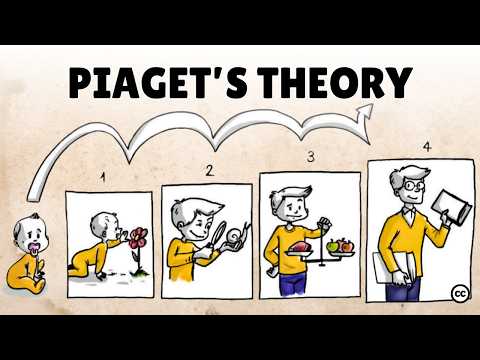
Piaget believed that children aren’t just mini adults. They think differently at various stages of their growth. He classified these stages into four main categories:
- Sensorimotor Stage (0-2 years): This is where infants learn about the world through their senses and actions. For example, a baby may put toys in their mouth to explore them.
- Preoperational Stage (2-7 years): During this stage, kids start using language but struggle with logic. Imagine a toddler thinking that if you cut a sandwich into smaller pieces, there’s more food.
- Concrete Operational Stage (7-11 years): Here, children begin to think logically about concrete events. They can understand concepts like conservation—knowing that a tall glass doesn’t hold more juice than a short wide one.
- Formal Operational Stage (12 years and up): This is when abstract thinking kicks in! Teenagers can ponder hypothetical situations or plan for the future.
Each stage builds on the previous one, making cognitive development a gradual journey. Now, Piaget also had some key insights about how this learning happens.
One major concept he introduced is schemes. Think of schemes as mental frameworks that help us organize knowledge. For example, when you see a dog for the first time, you might create a scheme for “dog” based on its size and shape. As you encounter different dogs later on, you adjust that scheme to include things like color or personality traits.
Another important idea from Piaget is assimilation and accommodation. These are two ways we adapt our schemes to new experiences:
- Assimilation: This happens when you fit new information into existing schemes without changing them much. You see a cat and think it’s just another type of dog because it has four legs.
- Accommodation: This is when your existing scheme doesn’t work anymore—you have to change it! After realizing cats are not dogs, you adapt your understanding to create a new scheme specifically for cats.
So why does any of this matter? Piaget’s theories have shaped educational practices around the globe. Teachers now recognize that kids should engage in hands-on activities appropriate for their developmental stage instead of just memorizing facts.
Let’s say you’re working with young children learning math concepts; instead of just showing them numbers on paper, letting them use physical objects—like blocks—to count and add makes those ideas stick better in their minds!
His work sparks further research too! For instance, today we explore how cultural influences can alter or enhance cognitive development outside his original framework.
All in all, Piaget’s insights remain fundamental in understanding how we grow mentally from infancy through adolescence and beyond. Just looking at how kids perceive the world helps us foster environments where they can thrive and learn effectively as they move through life’s stages. Isn’t it amazing how he opened doors for such deep exploration?
Understanding Piaget’s Stages of Cognitive Development: Key Insights and Implications
Understanding Piaget’s Stages of Cognitive Development
Okay, let’s talk about this dude Jean Piaget. He was a Swiss psychologist who came up with a pretty cool theory on how kids think and learn as they grow up. Basically, he believed that we go through different stages of cognitive development, which just means how our thinking processes evolve over time.
In his theory, Piaget identified four main stages:
- Sensorimotor Stage (0-2 years): This is where babies and toddlers learn through their senses and actions. They explore the world by touching, seeing, and moving things around. Like, when a baby shakes a rattle; they’re figuring out that it makes noise! It’s all about experiencing the here and now.
- Preoperational Stage (2-7 years): Now we’re talking about the imaginative phase! Kids start using language and symbols to represent things. You know when a child pretends their toy is a car? That’s symbolic thinking in action! However, they might struggle with understanding other people’s perspectives—like thinking everyone sees things just as they do.
- Concrete Operational Stage (7-11 years): At this stage, kids begin to think logically about concrete events. They get better at understanding math concepts—like knowing that 3 plus 2 equals 5. They’re also more capable of organizing things into categories or groups. Picture sorting marbles by color; this is how they start seeing relationships between objects.
- Formal Operational Stage (12 years and up): Teenagers finally kick it up a notch! They can think abstractly and reason about hypothetical problems. You know how teenagers start asking “What if…” questions? That’s them exploring possibilities beyond what’s right in front of them!
So, what does all this mean for you as parents or teachers? Well, understanding these stages can totally help you communicate with kids better.
Take the Sensorimotor Stage. If you’re around babies, playing peek-a-boo can be super engaging because they’re learning object permanence—basically realizing that something still exists even when it’s not in sight!
In the Preoperational Stage, it helps to encourage imaginative play since that’s where creativity blossoms! Engage with kids by asking open-ended questions during playtime.
When working with kids in the Concrete Operational Stage, using hands-on activities makes learning so much easier for them. Like using blocks to teach addition rather than just talking about numbers can really make a difference!
Finally, during the Formal Operational Stage, engaging them in discussions about ethical dilemmas or complex problems can stimulate their minds so they keep growing intellectually.
So yeah, Piaget’s insights into cognitive development aren’t just theoretical; they have real-world implications for parenting and teaching! By being aware of these stages, you can tailor your approaches to help kids thrive at each point in their journey of growth.
Exploring the Benefits of Piaget’s Theory of Cognitive Development: Key Insights and Applications
Piaget’s theory of cognitive development is all about how kids think, learn, and grow up. This French psychologist, Jean Piaget, spent years studying children and came up with some pretty cool insights. He believed kids go through specific stages that shape their understanding of the world. Let’s break it down.
The Stages of Development
Piaget identified four main stages:
- Sensorimotor Stage (0-2 years): At this stage, babies learn through their senses and actions. They explore by touching things, tasting them, or shaking them. It’s like the world is one big sensory playground!
- Preoperational Stage (2-7 years): Kids in this stage can think symbolically but struggle with logic. They might pretend a stick is a sword or think their toy dog is alive. Egocentrism is common here; they have a hard time seeing things from others’ perspectives.
- Concrete Operational Stage (7-11 years): Now, kids start to think logically about concrete events. They can understand the concept of conservation—like realizing that pouring water from a tall skinny glass into a short wide one doesn’t change the amount of water.
- Formal Operational Stage (12 years and up): Teens begin to think abstractly and reason about hypothetical situations. They can tackle problems involving possibilities rather than just real-life scenarios.
The Importance of Stages
Understanding these stages offers insight into how children’s thinking evolves over time. Imagine you’re trying to explain gravity to a five-year-old—they might not get that yet! On the other hand, a 12-year-old could discuss gravity in relation to space travel easily.
Cognitive Skills Development
Piaget’s theory points out that kids aren’t just little adults; they process information differently as they grow. This means when you’re teaching kids something new, it helps to match your approach to their developmental stage:
- If you’re working with toddlers, stories and play are crucial for learning.
- For younger school-aged kids, hands-on activities can really help solidify concepts.
- With teens, discussions and debates can stimulate their abstract reasoning skills.
Real-Life Applications
So where does this theory fit into everyday life? Teachers use Piaget’s insights all the time in classrooms:
- Curriculum Design: Educators create lesson plans that align with students’ cognitive abilities at each stage.
- Pacing Learning: Teachers recognize when students are ready to tackle more complex topics based on their current cognitive development level.
- Tutoring Strategies: Understanding where a child falls in these stages helps tutors target areas where they may be struggling.
Think about it: if everyone took more time to understand where kids were cognitively, we could make learning so much more effective!
Status of Piaget Today
While his work laid an important foundation for developmental psychology, it’s worth noting that some researchers have critiqued certain aspects of his theory. For instance, they argue that cognitive skills might develop more gradually than he suggested or that social interactions play a bigger role than he accounted for.
Still, Piaget’s belief in ‘active learning’, where children construct knowledge through experiences rather than passively absorbing information? Totally spot on! The takeaway here is lasting: encouraging exploration leads to deeper understanding.
So next time you’re working with younger folks—or even reminiscing about your own childhood—think about how powerful these insights can be! Understanding Piaget’s theories opens doors not just for educators but for parents too as they navigate raising curious little minds eager to figure out the world.
When you think about how kids grow and learn, it’s pretty wild. Like, some of the things they do and how they see the world make you stop and go, “Wait a minute!” That’s where Piaget comes in. He had this theory about cognitive development that really digs into how our brains evolve from childhood to adulthood.
So, Piaget basically divided childhood into four main stages—like checkpoints for mental growth. The first one is the Sensorimotor stage. It’s all about babies discovering the world through their senses and actions. I mean, have you ever watched a baby get totally fascinated by their own toes? It’s like they’ve just unlocked a secret level in life! They don’t even think yet; it’s all about feeling, tasting, moving.
Then comes the Preoperational stage. This is where kids start using language but are super egocentric. They can’t really see things from other people’s perspectives just yet. Imagine a kid explaining their favorite toy to you and assuming you love it as much as they do—it’s adorable but also kind of limited, right? I remember my niece trying to convince me her stuffed unicorn was real because she had given it a name and a backstory!
Next up is Concrete Operational. That’s when they start thinking logically but still need to see things physically—the “okay, I get it now” phase. You know when kids suddenly understand that if you pour juice from one cup to another, it’s still the same amount? It’s like watching them connect dots!
Finally, we have Formal Operational. This is where abstract thinking kicks in—like realizing that concepts such as freedom or justice can be debated in various ways. Suddenly those brain gears are grinding out ideas like crazy! I remember talking to my little cousin about superheroes; at first, he could only think about their powers literally but eventually started asking moral questions about what makes someone a hero.
What gets me is how Piaget’s work highlights that learning isn’t just rote memorization; it’s this dynamic process of building knowledge through experiences and interactions with others—and that’s super important in education today! Understanding these stages helps parents and teachers support kids’ learning more effectively.
So yeah, just thinking back on these developmental stages gives insight into not only how we learn but why certain things can be so baffling at different ages! It’s kind of comforting to know there’s this roadmap for understanding our little ones—and even ourselves as we grow up!