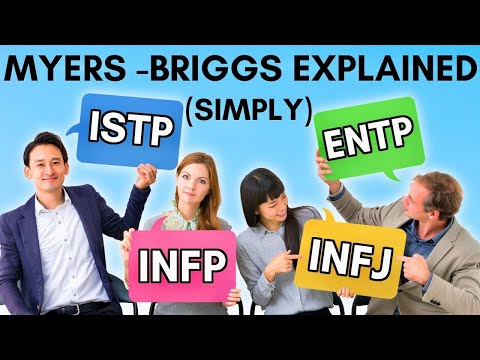
You ever wonder why some people just click with you, while others drive you up the wall? Yeah, it’s wild how different we all are.
That’s where this MBTI thing comes in. It’s not just a bunch of letters—it’s a whole way to understand personalities.
Seriously, it’s like having a map for understanding yourself and everyone else around you. You’re an introvert, extrovert, or something in between?
It helps you figure out your vibe and how it meshes with others. So let’s dig into this thing! You in?
Understanding the Myers-Briggs Type Indicator Test: A Comprehensive Guide to Personality Assessment
The Myers-Briggs Type Indicator (MBTI) test is a tool used to help you understand your personality. So, what’s the deal with this assessment? Well, it’s based on a theory proposed by psychologist Carl Jung, who believed that people experience the world in different ways. The MBTI breaks these differences down into four dichotomies, creating 16 distinct personality types.
These dichotomies are:
- Introversion (I) or Extraversion (E): This refers to where you get your energy from. Introverts tend to recharge alone while extraverts thrive in social settings.
- Sensing (S) or Intuition (N): This is about how you prefer to take in information. Sensing folks focus on concrete facts, while intuitive types look for patterns and meanings.
- Thinking (T) or Feeling (F): This dimension relates to how you make decisions. Thinkers base their choices on logic and objective criteria. In contrast, feelers prioritize emotions and personal values.
- Judging (J) or Perceiving (P): This one’s all about how you interact with the outer world. Judgers like structure and planning, whereas perceivers prefer flexibility and spontaneity.
Let me break it down a bit more: if you were filling out this test, you’d answer questions that help reveal your preferences in each of these areas. Based on your answers, you’d get a four-letter code—like INFP or ESTJ—that gives insight into your personality.
Now, I remember when I first took the MBTI test at college. I was kind of nervous about what my results would say about me! When I found out I’m an INFP—a mix of introversion, intuition, feeling, and perceiving—it felt like someone had just handed me a mirror reflecting parts of myself I hadn’t fully recognized before.
People often wonder about the validity of these tests. While some criticize them for being too simplistic or not scientifically grounded enough, proponents argue that they provide valuable insights into one’s behavior patterns and preferences.
The practical uses of the MBTI include:
- Personal development: Knowing your type can help you understand yourself better and work on areas you want to improve.
- Career guidance: Some folks use MBTI results when exploring job options that might suit their personalities.
- Enhancing communication: Understanding others’ personality types can improve your relationships by fostering empathy and adaptability.
So here’s the thing: while the MBTI can be an interesting lens through which to view yourself and others, it’s not a strict rulebook for behavior. People are complex; no one can be fully defined by just four letters.
In essence, think of the MBTI as a starting point—like having a map that shows trails but doesn’t tell you all about every single rock or tree along those paths! The real adventure lies in exploring beyond those lines with an open mind.
So whether you’re taking the MBTI for fun or as part of personal growth—just remember: it’s all about understanding yourself better and maybe finding ways to connect with others along this crazy journey called life!
Understanding the Myers-Briggs Type Indicator: Insights and Applications for Personal and Professional Growth
The Myers-Briggs Type Indicator (MBTI) is one of those tools that really gets people talking about personality. It’s like a mirror for your mind, helping you see how you tick. So, let’s break it down in a way that makes sense, shall we?
To start off, the MBTI categorizes personality into **16 different types** based on four pairs of opposing preferences:
- Extraversion (E) vs. Introversion (I): This is about where you get your energy. Do you thrive in social settings or find peace in solitude?
- Sensing (S) vs. Intuition (N): This deals with how you take in information. Are you more focused on the concrete details or the big picture and patterns?
- Thinking (T) vs. Feeling (F): Here it’s all about decision-making. Do you lean on logic and objective criteria or do you prioritize personal values and emotions?
- Judging (J) vs. Perceiving (P): This preference is about how you interact with the world around you. Do you prefer structure and plans, or do you like to keep things flexible and spontaneous?
When paired together, these preferences produce a unique four-letter code for each personality type—like ISFJ or ENTP—that gives insights into how someone might behave in various situations.
Now, let’s chat about how this knowledge can help with **personal growth**. Understanding your type can highlight your strengths and weaknesses! For example, if you’re an INFP, known for being creative and idealistic but sometimes struggle with practical matters, recognizing this can prompt you to focus on developing those skills.
And it doesn’t just stop at personal growth; the MBTI has some real applications in **professional settings** too! Teams can use this framework to understand dynamics better. Knowing who’s an ENFJ might indicate they’ll be great at rallying the team together versus someone who’s more of an ISTP who prefers working independently on complex tasks without interruption.
Think of it like this: if you’ve ever been frustrated working on a group project because someone just didn’t “get” what you’re trying to say, it could be that your communication styles were clashing due to differing types! When people understand where each member is coming from based on their MBTI type, it’s like having a cheat code for teamwork.
Sure thing: there are some critics of the MBTI saying it’s too simplistic or not scientifically validated enough for serious psychology work. Some argue that people’s personalities are more fluid than these types suggest—like a river shifting course rather than being stuck in one channel forever.
But still! Many folks find value in using the MBTI as a springboard for reflection and discussion about personality differences. It’s just one piece of a larger puzzle when it comes to understanding yourself and others around you.
In essence, whether you’re looking to improve your relationships or enhance collaboration at work, getting to know the MBTI framework can offer some fascinating insights into why people act the way they do—and importantly—for how we can learn from each other along our journeys.
Understanding Myers-Briggs Type Indicator (MBTI): Practical Examples and Insights
The Myers-Briggs Type Indicator (MBTI) is a popular tool used to categorize personalities into different types. It’s based on the idea that people have different preferences in how they perceive the world and make decisions. Understanding these types can really help you grasp how different people tick, especially in various situations like work or relationships.
Basically, the MBTI is built around four dichotomies:
- Extraversion (E) vs. Introversion (I): This measures where you focus your attention. Extraverts are energized by interacting with others, while introverts feel recharged by spending time alone.
- Sensing (S) vs. Intuition (N): This one looks at how you prefer to take in information. Sensors focus on concrete details and present realities, whereas intuitives look for patterns and possibilities.
- Thinking (T) vs. Feeling (F): This reflects your decision-making style. Thinkers prioritize logic and objectivity, while feelers emphasize emotions and personal values.
- Judging (J) vs. Perceiving (P): This dimension indicates how you like to organize your life. Judgers prefer structure and plans, whereas perceivers enjoy being open to new experiences and flexibility.
These four dichotomies come together to form **16 unique personality types**! For example, an ENFP is an extroverted intuitive with feeling and perception preferences.
Understanding your MBTI type can be eye-opening. It’s like a light bulb moment when you realize why you react a certain way in stressful situations or why some activities feel draining while others fill you with energy.
Here’s a quick story for clarity: A friend of mine, let’s call her Sarah, is an ISFJ—introverted, sensing, feeling, judging. When planning a surprise birthday party for another friend who’s an ENFP—extroverted, intuitive, feeling, perceiving—Sarah took charge of all the details because she loves organizing things step-by-step. Meanwhile, the ENFP was buzzing about wanting to improvise with games and spontaneous fun during the party! If Sarah didn’t understand her type or that of her friend’s, they could’ve easily clashed instead of creating a fabulous celebration.
Having this framework helps ease potential misunderstandings between folks with differing styles too; imagine two coworkers tackling a project: one wants everything planned out meticulously while the other craves creative exploration without structure!
Still not sure if this resonates? Think about your circle of friends or family—you probably see traits that align pretty neatly within these MBTI categories! Knowing this can help improve communication since it highlights why we sometimes bump heads over decisions or approaches.
The MBTI isn’t perfect—it doesn’t define you completely but gives insights into preferences that can shape how you interact with others in daily life! So whether you’re figuring out career moves or navigating personal relationships, having this understanding can make paths clearer—and honestly? It’s pretty neat knowing there are countless ways to engage in this diverse world around us!
So, let’s chat about the MBTI, or Myers-Briggs Type Indicator. You’ve probably come across it at some point—maybe in a quiz on social media or even during a team-building workshop. It’s this personality framework that breaks down our quirks and tendencies into 16 different types, using four main pairs of opposites: introversion vs. extraversion, sensing vs. intuition, thinking vs. feeling, and judging vs. perceiving.
Now, here’s the thing: understanding your type can be kind of like peeking behind the curtain to see how you tick. For instance, my friend Sarah took the test one day simply out of boredom. Turned out she was an INFJ—definitely a rare type! Suddenly, everything made sense. Her deep empathy and those moments when she’d withdraw to recharge? All part of the INFJ package! It was like she found this little cheat sheet for her personality.
But it’s not just about knowing yourself better; it’s also about understanding others around you. If you end up working with someone who’s an ESTJ (that’s more of the take-charge type), realizing they thrive on structure might explain why they keep pushing for deadlines while you’re still brooding over ideas in your head! It can turn potential clashes into “ah-ha!” moments.
Still, here’s where it gets tricky: people sometimes treat these labels like they’re set in stone. That can be a real pitfall because we’re all way too complex for just four letters to capture us fully! I mean, if you’re an ENFP with a penchant for spontaneity who also loves organizing events down to the last detail? You might find yourself straddling two worlds.
And then there are those times when you feel somewhat out of sync with your type—or maybe you take the test again years later and get something different! Our lives change us in unique ways; we grow through experiences that mold our personality over time.
So while MBTI can provide some neat insights into who we are and how we relate to each other, it’s crucial to remember that they’re just starting points—not definitive answers or boxes we need to fit into. Seriously, it all comes down to embracing our individuality while appreciating the quirks that make us human.