You know those moments when you just can’t figure out why you react a certain way? Or why your friend seems to get all fired up over something that doesn’t even phase you? Yeah, it can be a total head-scratcher.
Well, that’s where the Myers-Briggs Framework comes in. It’s kind of like a map for understanding your mind and those of others. Super handy, right?
Imagine if you could unlock the secrets to why you click with some people and clash with others. That’s the magic of diving into this whole personality thing!
So, grab a comfy seat and let’s unpack this together. You might just discover some cool stuff about yourself along the way!
Unlocking Personal Insights: Navigating the Myers-Briggs Framework for Self-Discovery
So you’re curious about the Myers-Briggs Framework? You’re not alone! It’s a popular way for folks to dig deep into their personalities and understand themselves better. Basically, it’s based on the idea that everyone has different ways of thinking and behaving, which can really shape how they interact with the world.
The Myers-Briggs Type Indicator (MBTI) categorizes people into 16 different personality types. It uses four scales, and each one has two opposing preferences. Here’s how it breaks down:
- Extraversion (E) vs. Introversion (I): This scale tells you where you get your energy from. If you’re an ‘E’, you thrive in social situations and love being around people. If you’re an ‘I’, you recharge by spending time alone or with a close friend.
- Sensing (S) vs. Intuition (N): This part deals with how you take in information. ‘S’ types focus on facts and details—think concrete experiences. On the flip side, ‘N’ types look at patterns and possibilities, often thinking about the bigger picture.
- Thinking (T) vs. Feeling (F): Here’s where decision-making comes in. A ‘T’ person relies on logic and objective criteria while making choices, whereas an ‘F’ type is more about values and how decisions impact others.
- Judging (J) vs. Perceiving (P): This dimension speaks to your approach to life and structure. ‘J’ folks like things settled and organized; they tend to plan ahead. However, ‘P’ types are more flexible, preferring to keep their options open.
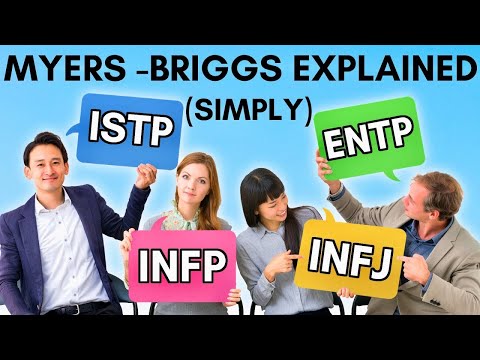
When combined, these traits form a four-letter code like INFP or ESTJ that represents your personality type. Each type has unique characteristics that can help you understand your preferences—both strengths and weaknesses—which can be super helpful for personal development.
A fun example? Let’s say you’re an INFP, often seen as idealistic and compassionate folks who value authenticity above all else. You might feel deeply about causes or relationships but struggle with practical tasks because those just don’t light up your passion like creative projects do.
This framework isn’t just about labels though; it’s a tool for self-discovery. By figuring out your type, you can gain insights into how you communicate, what environments energize you, or even what kind of work suits your style best.
You might wonder why this matters in real life! Well, knowing your Myers-Briggs type can lead to better communication with others—especially if they’re different from you! For instance, if you’re more of a ‘P’ type working with a ‘J’ type who likes structure, understanding these differences can ease frustrations in both work projects or friendships!
The thing is: this isn’t some magic formula that defines everything about who you are—it’s more of a lens through which you can explore yourself better. The key takeaway? Embrace it as a way to reflect on behaviors rather than boxing yourself into one category forever!
Straightforward self-reflection using Myers-Briggs can lead to better relationships and achieving goals that resonate with *who you really are*. So next time someone brings up personality tests at dinner parties or group chats—get ready to share some insights!
Discover Your Myers-Briggs Personality Type for Free: Unlock Insights and Enhance Self-Awareness
So, the Myers-Briggs Type Indicator (MBTI) is pretty interesting. It’s this personality framework that helps you better understand yourself and how you interact with others. You know, sometimes it feels like you’re just floating through life, and a little guidance can really help.
The MBTI breaks down personalities into 16 different types. Each type is identified by a four-letter code. For example, you might be an INFP or an ESTJ. These letters stand for different traits: Introversion or Extraversion, Intuition or Sensing, Thinking or Feeling, and Judging or Perceiving. It’s like a fun way to think about how you tick.
When you take the test—trust me it’s super easy—you’ll find out what your preferences are in these four areas. And here’s the thing: knowing your type can give you insights into your personal strengths and weaknesses. For example, let’s say you’re an ENTJ. Being an Extraverted person means you probably feel energized around others and maybe tend to take charge in group situations. Cool, right?
But why would anyone care about their Myers-Briggs type? Well, once you know your personality type, it can seriously enhance your self-awareness. You might start to notice patterns in how you handle stress or communicate in relationships. Maybe you’ve always struggled with making decisions under pressure—turns out that could have something to do with being more of a Feelings-oriented person.
Here are some key points:
- Self-Discovery: Understanding your type can lead to better decision-making.
- Improved Relationships: Knowing how different types interact helps improve communication.
- Career Choices: Some jobs might suit your personality more than others.
- Personal Growth: Recognizing habits allows for targeted self-improvement.
Let’s say you’re often finding yourself stuck between wanting to be social but also loving alone time; knowing whether you’re Introverted or Extraverted can put things into perspective.
And here’s something else: people often get confused between the MBTI and astrology! They’re very different! While astrology tells us about our traits based on birth dates (which is cool but kinda vague), the MBTI dives deeper into cognitive styles based on psychological theories by Carl Jung.
So if you’re curious about what makes you tick—and who isn’t?—check out a free Myers-Briggs test online! Just answering those questions could open up a whole new layer of self-awareness for you.
In short: Understanding yourself through something like the Myers-Briggs framework isn’t just about labeling who you are; it’s about discovering ways to grow and navigate this wild ride called life!
Understanding the Myer Briggs Personality Test: Insights and Applications in Personal Development
The Myers-Briggs Personality Test is a fascinating tool that helps you understand yourself and how you relate to others. It’s based on a theory by Carl Jung, so there’s some brainy stuff behind it, but don’t worry! I’ll break it down for you.
The Basics
At its core, the Myers-Briggs Type Indicator (MBTI) categorizes your personality into one of 16 different types. Each type is made up of four dichotomies:
- Introversion (I) or Extraversion (E): This reflects where you get your energy from. Do you feel recharged by being alone or around others?
- Sensing (S) or Intuition (N): This shows how you take in information. Are you more focused on concrete details or abstract ideas?
- Thinking (T) or Feeling (F): This reveals how you make decisions. Do you rely more on logic and facts or personal values and emotions?
- Judging (J) or Perceiving (P): This indicates how you take in the world around you. Are you more structured and organized, or do you prefer to keep things open-ended and flexible?
Each combination creates a unique personality type, like INFP or ESTJ. Pretty cool, huh?
Why It Matters
Understanding these types can be super helpful in many areas of your life. For instance, knowing your personality type can help with personal development, career choices, and even relationships.
When I first took the MBTI test, I was blown away by how accurately it described me! It pointed out my tendency to overthink things and my love for deep conversations over small talk. It really made me reflect on what environments I thrive in.
Applications in Personal Development
Let’s talk about some ways it can actually help:
- Self-Awareness: You begin to identify your strengths and weaknesses better when you’re aware of your type.
- Communication Skills: Understanding the types can improve how you interact with others; you’ll recognize different styles right away!
- Coping Strategies: Some personality types handle stress differently. Knowing this helps tailor your approach when things get tough.
- Career Paths: Certain jobs align better with specific personality types. For example, extroverts may shine in sales roles while introverts might excel in research.
You see? It’s not just fluff; there’s real value here.
Cautions to Keep In Mind
While the MBTI is intriguing, it’s important not to box yourself into a single label too tightly. People are complex! Just because you’re an INFJ doesn’t mean you’re going to react the same way every time something happens.
Also, research shows that personality traits can change over time due to life experiences and personal growth. So it might be useful to revisit the test every few years!
In short, understanding yourself through the Myers-Briggs framework offers insightful perspectives that could enhance various aspects of your life—whether that’s navigating relationships or choosing a career path that suits who you are at your core!
You know, diving into the Myers-Briggs Framework can be kind of a wild ride. It’s not just a bunch of letters that tell you if you’re an introvert or extrovert; there’s so much more to it. When I first took the test, I was kind of skeptical. Like, how can a few questions really guide me to understand myself better? But once I got my results, it was like a light bulb moment!
So, each of those four pairs—like introversion vs. extroversion or thinking vs. feeling—helps you get a peek behind the curtain of your own brain. For instance, I’m all about that INTJ life. I’ve always known I’m more inclined to plan things out rather than go with the flow. But seeing it all laid out made me realize that’s just how my mind works! It wasn’t just random quirks; they were part of something bigger.
And here’s where it gets real interesting: understanding these traits isn’t just for fun; it can affect how you handle relationships and work situations. Like, when I read about how INTJs communicate, it hit home hard! For years, people would say I come off as cold or aloof during conversations, but learning about my personality helped me see that this isn’t intentional at all—it’s just my style.
I remember a time in college when I was working on a group project. Total disaster zone! Everyone wanted to brainstorm ideas out loud and throw stuff around while I was sitting there thinking, “Can we please make a plan first?” That conflict stemmed from our different ways of approaching tasks based on our personalities. If we had understood each other better back then, things could have turned out way smoother!
Plus, knowing your type gives you this little insight into why you react the way you do in certain situations. Sometimes I’d find myself overwhelmed at social events or feeling drained after hanging out with friends for too long—it felt wrong until I realized that’s just me being an introvert trying to navigate an extroverted world.
So basically, the Myers-Briggs Framework isn’t some magical box where you label yourself and call it a day. It’s more like a mirror that reflects parts of you you’ve maybe overlooked or misunderstood before. Once you’re aware of these patterns and behaviors, it’s like finding new tools for your personal toolbox—you can approach life with new strategies based on who you truly are.
In the end? Understanding yourself through this lens doesn’t define everything about you but gives you context—a starting point for growth and connection with others who think differently than you do. And honestly? That realization feels pretty liberating!