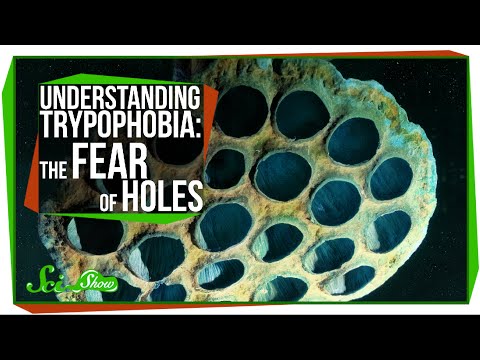
So, you know when you see something like a bunch of tiny holes clustered together and it just makes your skin crawl? Yeah, that’s a real thing, and it’s called trypophobia. Crazy, right?
I mean, who thought holes could be so scary? But the thing is, fear can show up in the weirdest ways. Sometimes it feels like a tiny monster living in your head, making you squirm at the sight of things that probably shouldn’t bother you at all.
What’s even stranger is that this fear can be super intense for some people. It brings up all sorts of emotions and thoughts. Let’s take a closer look at what’s going on here and why those little holes seem to pack such a big punch.
Exploring the Link Between Trypophobia and Mental Health Disorders: Insights and Implications
You know, trypophobia is that thing where you feel really uneasy or even freaked out by small holes clustered together. It sounds kinda strange, but for some people, it can trigger intense feelings of discomfort. Basically, it’s not officially recognized as a mental disorder in the DSM (that’s the big manual for diagnosing mental health issues), but many people report experiencing it strongly.
Now, when we look at the link between trypophobia and mental health disorders, it gets interesting. Some folks who have anxiety disorders or phobias seem to have a heightened response to images that trigger trypophobia. These images can stir up feelings of fear or disgust, leading to panic attacks or anxiety-driven thoughts.
- Anxiety Disorders: People with generalized anxiety disorder might find that their reactions to clusters of holes can amplify their general sense of unease. It’s like a double whammy—you’re already anxious, and then something triggers those uncomfortable vibes.
- Obsessive-Compulsive Disorder (OCD): With OCD, you might obsess over things that trigger your fear response—a picture of honeycomb could lead to spiraling thoughts about dirtiness or infection.
- Post-Traumatic Stress Disorder (PTSD): If someone has had a traumatic experience related to small holes—like an injury or an environmental situation—seeing similar patterns might bring back those memories and heighten distress.
So what happens here is kinda complex. Trypophobia taps into our brain’s wiring around fear and disgust. There’s this idea that humans are hardwired to be cautious of things that look abnormal, which could be why these hole patterns feel off-putting. It’s less about the holes themselves and more about what they represent in terms of safety and survival.
A lot of the time, trypophobia gets linked with other conditions because it showcases how our brains work when processing fear. For example, you might be chilling on Instagram when suddenly a post shows a close-up of porous skin or lotus seed pods. Your heart races outta nowhere even though you were just scrolling casually! That involuntary reaction? Totally normal!
In terms of implications for mental health, understanding trypophobia means we can explore treatments for those who are heavily affected by it. Talking therapies might help people confront their fears in a safe environment while gradually desensitizing them to triggering images.
Beyond treatment options, raising awareness can help sufferers feel less isolated. So many share similar experiences but think they’re alone in feeling this way about small holes—knowing there’s a community can really ease some burden!
All in all, while we’ve got more to learn about trypophobia itself and its interaction with mental health disorders, recognizing its potential links is key. Acknowledging our quirks can pave the way towards understanding ourselves better—a win-win if you ask me!
Understanding Trypophobia: Exploring the Causes and Impacts of Fear of Tiny Holes
Trypophobia is an overwhelming fear or aversion to clusters of small holes, bumps, or patterns. You know those images that can just make your skin crawl? Yep, that’s what we’re talking about. Some people experience actual physical reactions when they see things like honeycombs or lotus seed pods. But what’s behind this peculiar fear?
First off, let’s break down the causes. The phenomenon isn’t officially recognized as a psychological disorder—but that doesn’t mean it isn’t real for those who experience it. Here are some things to consider:
- Evolutionary Perspective: One theory suggests that trypophobia might be linked to our survival instincts. Clusters of holes can resemble the skin of disease-ridden animals, prompting a natural aversion.
- Aesthetic Discomfort: Humans are wired to seek balance and harmony in visual patterns. Clusters of holes disrupt this aesthetic and can trigger feelings of unease.
- Associative Learning: If you had a negative experience associated with holes—let’s say you saw something creepy related to them—that memory could stick with you and create a lasting fear.
Isn’t it wild how our minds work? Like, if you’re at the beach and step on something spongy, your brain might suddenly flash back to a time when you had an unsettling encounter with moldy bread—totally unrelated but somehow connected.
Now let’s talk impacts. For people with trypophobia, the reactions can be pretty intense. Imagine scrolling through social media, and suddenly there’s an ad for a new skincare product showcasing pores in extreme close-up. It can feel like a punch in the gut.
- Anxiety Responses: Many report feeling anxious, sweating, or even nauseous upon seeing certain holey images.
- Avoidance Behavior: This fear can lead folks to avoid places or objects that might contain these disturbing patterns—think about how many times you’ve skipped woodwork just because of those knots in the wood!
- Sensory Overload: For some, even thinking about clusters of holes can trigger stress responses—it’s like their mind spirals into panic mode.
You see someone react strongly to something seemingly harmless—a sponge full of holes—and it might seem odd if you don’t share their fears. But remember: emotional reactions vary immensely from person to person!
In short, trypophobia is all about deep-rooted instincts and personal experiences shaping how we respond to certain visual stimuli. Whether it’s biological survival mechanisms at play or just plain old discomfort with patterns—we all carry different fears that influence our lives in unexpected ways!
Exploring the Connection: Is Trypophobia Considered a Form of OCD?
Trypophobia is that odd feeling some people get when they see clusters of small holes or bumps. It can make you feel uneasy, anxious, or even nauseous. You might have seen those images of honeycombs, seed pods, or even the texture of certain foods—like strawberries—that trigger this reaction. But is it really a form of OCD? Let’s break that down together.
First things first, Obsessive-Compulsive Disorder (OCD) involves persistent thoughts (obsessions) and repetitive behaviors (compulsions) that occupy a person’s mind. Someone with OCD might wash their hands repeatedly or check the door locks several times because they feel anxious if they don’t. The key part here is that these compulsions are often aimed at reducing the anxiety caused by obsessions.
Now, when we think about trypophobia, it’s a bit different. People who experience this phobia usually have an intense discomfort or fear triggered by those small hole patterns. It’s more about an emotional response to specific visuals rather than the kind of control issues we see in OCD.
There’s also the question of whether trypophobia fits in with other anxiety disorders. Anxieties can manifest in various forms, and while trypophobia can cause significant distress for many people, it doesn’t neatly fit under OCD criteria.
- Fear Response: Trypophobia seems to trigger a visceral fear reaction without the compulsive behaviors typical in OCD.
- Anxiety Features: It does share traits with anxiety disorders—feeling overwhelmed when faced with those patterns—but it doesn’t involve the broader obsession-compulsion cycle.
- Coping Mechanisms: People with trypophobia might avoid certain visuals altogether instead of engaging in compulsive rituals.
A cool example here would be how someone feels when they spot mold on food or see a bunch of pockmarks on a surface. It can be unsettling and provoke an urge to look away or distance oneself from whatever’s causing that discomfort.
Also, there’s been research into why some folks are more prone to trypophobia than others. Scientists speculate that it could stem from evolutionary factors—our brains might be wired to react strongly to potentially harmful stimuli like insects’ holes or certain diseases’ textures.
So where does this leave us? While both tryptophobia and OCD deal with anxiety, they’re distinct experiences. They might share some overlap in terms of how they affect you emotionally but don’t fundamentally operate in the same way.
In summation, if you find yourself feeling queasy at the sight of small holes but aren’t stuck washing your hands over and over again—or checking for locks—you’re likely experiencing trypophobia rather than a manifestation of OCD. It’s all about understanding what makes you tick and respecting your own reactions as part of being human!
You know that creepy feeling you get when you see a bunch of small holes clustered together? Yeah, that’s called trypophobia. It’s not officially recognized as a mental disorder, but it sure can make some people feel uneasy. Imagine staring at a honeycomb or a cluster of seeds in a fruit and feeling that chill run down your spine. It’s weird, right?
So, what gives? Basically, the fear often comes from our brains doing some crazy overthinking. Our minds are wired to be on high alert for anything that could be dangerous. Back in the day, it might’ve helped our ancestors survive if they spotted something potentially harmful—like a swarm of insects or dangerous diseases lurking in the patterns of those holes.
There’s also this idea about patterns and symmetry. Humans seem to love order and neatness. When we see something that disrupts that—like random holes packed close together—it can trigger an instinctual response. It’s almost like our brain is saying, «Whoa, hold on! That doesn’t look right!»
There was this time when I went to visit my cousin at her apartment. She had this oddly captivating art piece with tiny holes all over it, meant to look cool but honestly? I was super uncomfortable looking at it! My cousin thought I was being dramatic when I recoiled a bit. But there I was, just overwhelmed by this strange pattern making me feel kind of anxious.
Some researchers suggest that trypophobia might be linked to deeper fears—maybe even fears of decay or disease, since those things often come with spots and holes too. So it’s not just about the visual; it’s about what those images might represent at a primal level.
At the end of the day, fear is complex and deeply personal. It can stem from our experiences or even what we’ve been taught throughout life. Next time you find yourself staring at an odd pattern and feeling that shiver? Know you’re not alone—it’s just your brain trying to keep you safe while having its own little freak-out session!