You know how kids seem to think differently than adults? Like, they can see the world in such a unique way? Well, there’s a reason for that.
Jean Piaget, a Swiss psychologist, had some pretty wild ideas about how we learn and grow. He basically broke down cognitive development into stages, showing us how our thinking evolves as we age.
It’s kinda like he mapped out a journey of the mind! I mean, isn’t it cool to think about what happens in our heads as we go from babies to big kids?
So, let’s unpack his thoughts and insights. Trust me, it’ll make you look at those little ones in your life a whole new way!
Understanding the Key Concepts of Piaget’s Theory of Cognitive Development
Understanding Piaget’s Theory of Cognitive Development
Alright, let’s chat about this guy, Jean Piaget. He was a Swiss psychologist who had a pretty big impact on how we look at children’s thinking. His idea was that kids go through a series of stages as they develop their understanding of the world. The thing is, these stages aren’t just random; they’re part of a natural progression.
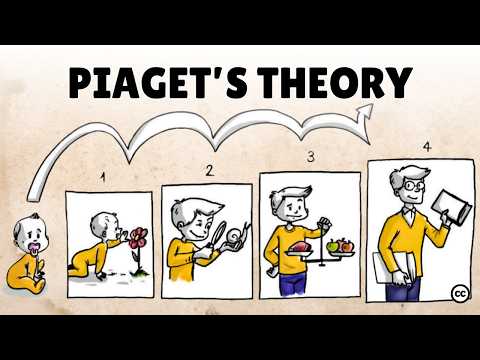
So, basically, Piaget identified four key stages of cognitive development:
What’s super interesting is how Piaget believed that cognitive development isn’t just handed down by parents or teachers—it unfolds naturally as kids interact with their environment. This process is called “schema,”, which refers to the mental frameworks kids create based on their experiences.
Sometimes these schemas have to change—a process known as assimilation and accommodation. For example:
– **Assimilation** is when you fit new information into an existing schema. Let’s say your dog barks like crazy when someone rings the doorbell. If you see another dog bark too when the doorbell rings, you might think “All dogs bark at doorbells!”
– **Accommodation**, however, happens when new information doesn’t fit into your current understanding; you have to change your schema for it to work. If you meet a cat that meows instead of barking at the doorbell? Well now you’ve got to adjust your thinking about animals.
Check this out: Piaget’s theory really highlights how important it is for children to engage in active play and hands-on activities during learning because that’s how cognitive structures are built up.
In summary, Piaget’s insights remind us that children’s minds are not just mini versions of adults’. They experience the world differently at each stage of development! Understanding those stages helps parents and educators provide better support tailored for each developmental phase.
So there you have it—a peek into Piaget’s fascinating take on how our brains grow up right along with us!
Exploring Jean Piaget’s Key Insights on Cognitive Development
Sure! Let’s talk about Jean Piaget and his key insights on cognitive development, shall we? This guy’s work really changed how we think about how kids learn and grow mentally.
First off, Jean Piaget was a Swiss psychologist who had this theory that kids don’t just soak up knowledge like sponges. Instead, they actively build their understanding of the world around them. It’s like they’re little scientists, testing out different ideas to see what sticks.
Piaget proposed four main stages of cognitive development:
- Sensorimotor Stage: This spans from birth to about 2 years. Babies learn through their senses and movements. Imagine a baby shaking a rattle—it’s not just noise; they’re discovering cause and effect.
- Preoperational Stage: From ages 2 to 7, kids start using language but struggle with logic. Like when your kid thinks that if they can’t see you hide behind a couch, you must be gone forever! They’re really good at imagining things but can’t yet grasp complex concepts.
- Concrete Operational Stage: Between ages 7 to 11, children begin thinking logically about concrete events. Say you have two equal balls of clay—squish one into a pancake shape. They start to understand that even though it looks different, the amount of clay hasn’t changed.
- Formal Operational Stage: This kicks in around age 12 and up. Now, teens can think abstractly and reason logically about hypothetical situations. Imagine debating whether superheroes could exist—they use logical reasoning instead of just personal experiences.
So what’s the big deal about these stages? Well, Piaget believed each stage built on the last. Kids move through them at their own pace which means there’s no rushing it! It’s like climbing a ladder; you can’t skip rungs without falling.
Another cool insight from him is the idea of schemas. Think of schemas as mental frameworks or blueprints that help us categorize information. For example, if you see a dog for the first time, your schema for animals expands because now dogs fit into that category! That adaptability is called accommodation. But if you see a cat and just label it as another kind of dog without adjusting your schema—that’s called assimilation.
The whole thing really makes sense when you watch how kids interact with their environment. I remember seeing my nephew playing with blocks. At first, he just stacked them randomly but after some trial and error—he started creating towers that didn’t fall over as easily! That’s him using his experiences to build new knowledge.
One more important piece is Piaget’s concept of egocentrism, especially in younger children. Basically, they struggle to see things from someone else’s perspective. Like when my friend tried asking her daughter why she thought her picture was so beautiful only to realize she didn’t consider other people’s tastes at all!
Piaget’s work laid down the groundwork for educational practices too! Teachers now focus on hands-on learning so kids can explore concepts directly instead of memorizing facts without context.
In summary, while there are critiques around some aspects of his theories today—like underestimating children’s abilities—there’s no denying Piaget opened up this amazing window into understanding how we think as we grow up.
Hope this gives you a clearer idea about Jean Piaget’s influence on cognitive development! Pretty cool stuff when you start digging into it all, right?
Key Insights into Piaget’s Schema Development Theory: 4 Essential Points Explained
Piaget’s Schema Development Theory is like a road map for understanding how kids learn and grow. So, let’s break this down into some key insights that can help you get a grip on it.
1. What Are Schemas?
Schemas are mental frameworks that help us organize and interpret information. Basically, they’re the building blocks of knowledge! When you first encounter something new, your brain tries to fit it into an existing schema or creates a new one if nothing fits. Like, say a child sees a dog for the first time; they might have a schema for “four-legged animals” and try to place dogs in there.
2. Assimilation vs. Accommodation
These two processes are how we adapt our schemas. Assimilation happens when you take new info and fit it into an existing schema. For example, if that same child sees a cat and calls it a dog because they only know one kind of four-legged animal, they’re assimilating! On the other hand, accommodation is when you change your existing schema to fit new information—like realizing that not all four-legged animals are dogs!
3. Stages of Cognitive Development
Piaget proposed four stages through which children progress:
- Sensorimotor Stage (0-2 years): This is all about experiencing the world through senses and actions. Babies learn by touching, seeing, and sucking on objects.
- Preoperational Stage (2-7 years): Kids start using language but might struggle with logic or seeing things from others’ perspectives.
- Concrete Operational Stage (7-11 years): Here’s where thinking becomes more logical but still grounded in concrete objects; abstract thinking is tough!
- Formal Operational Stage (12 years and up): Teens can now think abstractly and reason logically about hypothetical situations.
4. The Importance of Play in Learning
Playtime isn’t just fun; it’s crucial for cognitive development according to Piaget! When kids play, they experiment with their environment and push their schemas further. Like when kids play house or pretend to be superheroes—they’re not just having fun; they’re practicing social roles, problem-solving, and making sense of the world around them.
So there you have it! Piaget’s theory gives us insight into how children make sense of their surroundings by building mental frameworks over time. It’s fascinating to see how these stages unfold as kids grow up!
When you think about how kids learn and grow, Jean Piaget’s ideas really stand out, don’t they? I mean, the way he broke down cognitive development feels like peeling an onion—layer by layer. You start to see how our minds actually work as we age.
So, Piaget basically said that children move through stages of cognitive growth. It’s kinda wild if you think about it. For instance, a baby sees the world very differently than a teenager does. He defined four main stages: sensorimotor, preoperational, concrete operational, and formal operational. Each one is like a stepping stone to the next level of thinking. You know? When babies are in that sensorimotor stage, they’re just figuring out their bodies and learning through their senses—grabbing things, chewing on them… that’s all part of how they make sense of the world.
I remember watching my little niece when she was around one. She would pick up her toys and just put them in her mouth or smash them against each other—not super clear what she was doing at first but it was all part of her exploration! That stage is all about discovering cause and effect through play. It’s pretty cool when you realize this innocent curiosity sets the groundwork for everything else.
Moving on to that preoperational stage; this is where kids start using language and symbols but might not fully grasp logic just yet. I can’t help but chuckle when I think back to those days my nephew tried to convince me that his stuffed dinosaur was real! He had such conviction! It’s charming but also illustrates how these mental images shape their understanding—even if they’re not quite grounded in reality.
Then there’s the concrete operational stage where things start getting more structured for them. They begin to understand concepts like conservation—like knowing that if you pour water from a tall glass into a wider one, there’s still the same amount of water! Seriously wild stuff for a kid who used to think taller equals more!
Finally, in formal operational stage comes abstract thinking—the ability to handle hypothetical situations or think about possibilities beyond the “here and now.” I always found this fascinating because it really shows how our thoughts mature into something deeper.
What’s interesting is even though Piaget laid out these neat little boxes for stages, life isn’t always tidy like that! Kids sometimes bounce around between stages or even mix elements from different ones based on their experiences—that’s just life being messy! It makes me wonder what kind of experiences drive those shifts and impact their development further down the line.
Overall, Piaget gives us this awesome framework that’s still relevant today when we’re looking at education or parenting approaches. Understanding these stages can definitely help grown-ups guide kids in ways that match where they are cognitively—you know? The insights from his work remind us not just about learning but also about nurturing curiosity and creativity along every step of the way.