Okay, so let’s talk about this guy, Jean Piaget. You know him, right? He’s that dude who really got into how kids think and learn.
Like, he looked at it all—how our brains evolve from tiny tots trying to figure stuff out to big kids with more complex thoughts. Wild, huh?
What’s cool is his whole theory on cognitive development gives us these neat stages to understand. It’s like a roadmap of childhood thinking!
Ever wondered why your kid suddenly gets obsessed with dinosaurs or starts asking a million questions? That’s Piaget in action!
So, buckle up! We’re diving into how this guy’s ideas can totally change the way we see growing minds. Sounds fun, right?
Exploring Jean Piaget’s Theoretical Perspective: Insights into Cognitive Development Theory
Jean Piaget was a Swiss psychologist, and he’s super well-known for his work on how kids think and learn. His big idea was that kids go through stages as they grow up, and each stage brings different ways of understanding the world. So, basically, he saw cognitive development as a kind of journey rather than just a series of facts memorized.
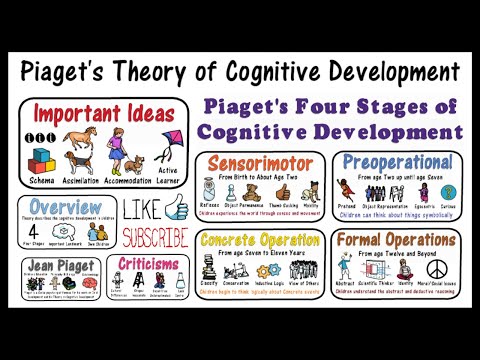
Piaget identified four main stages that children typically pass through:
The cool thing about Piaget is that he emphasized active learning. He believed kids aren’t just empty pots waiting to be filled with knowledge; they’re like little scientists experimenting with the world around them. When your child takes apart a toy to see how it works? That’s cognitive development in action!
Piaget also introduced two terms: assimilation and accommodation.
His theory has been super influential in education too! Teachers often try to create environments where kids can explore freely rather than just sit at desks all day memorizing facts. Think of hands-on projects or group discussions—it’s all about making learning engaging.
In conclusion, Piaget’s insights into cognitive development have really shaped how we understand children’s thinking processes today. His perspective is not just useful for psychologists but equally beneficial for parents and educators alike! So next time you watch your child explore or learn something new? Just remember—you’re witnessing some serious cognitive development happening right before your eyes!
Exploring Theoretical Perspectives on Cognitive Development: Key Frameworks and Insights
Cognitive development is a fascinating journey we all go through. Jean Piaget, a Swiss psychologist, is one of the most well-known figures in this realm. His theories provide crucial insights into how kids think, learn, and understand the world around them.
Piaget believed that children aren’t just mini adults. Instead, they think differently at various stages of their growth. He identified four key stages of cognitive development:
- Sensorimotor Stage (0-2 years): In this phase, babies learn through their senses and actions. Imagine a baby shaking a rattle; it’s not just noise but also an exploration of sound and movement.
- Preoperational Stage (2-7 years): Here, children start to use language and develop memory. They might engage in pretend play—like dressing up as superheroes—where their imagination runs wild but logic isn’t fully there yet.
- Concrete Operational Stage (7-11 years): Kids begin to think logically about concrete events. So when they start doing math problems or understand the concept of conservation (like knowing that water poured into a tall glass is still the same amount), they’re showing cognitive growth.
- Formal Operational Stage (12 years and up): This is when abstract thinking kicks in. Adolescents can handle hypothetical situations and consider future possibilities—like planning out career paths or debating ethical dilemmas.
Now, you might wonder why Piaget’s work matters today. Well, it’s shaped educational practices worldwide. Teachers use his ideas to create age-appropriate learning activities, making sure kids are challenged just enough to keep them engaged but not overwhelmed.
But here’s the thing: Piaget’s theory isn’t without its critics. Some argue he underestimated children’s abilities at certain ages; kids might grasp concepts earlier than he believed. For instance, research has shown that even infants can show signs of understanding basic quantities before reaching two years.
Another perspective comes from Sociocultural Theory, proposed by Vygotsky. He argued that social interactions significantly influence cognitive development compared to Piaget’s focus on individual discovery through stages.
So what’s essential to take away? Understanding these frameworks helps us see how our minds evolve as we grow up! It also highlights how different environments and experiences shape our thinking patterns.
In essence, exploring these theoretical lenses gives us valuable insights into human behavior—showing just how incredible our brains are as we navigate life! Isn’t it cool to think about?
Exploring Piaget’s Theory: Key Examples and Applications in Child Development
Understanding Piaget’s theory of cognitive development can feel like stepping into a fascinating world. Jean Piaget, a Swiss psychologist, was super curious about how kids think and learn. He decided to break it down into stages, each with its own unique characteristics. So, let’s dive into those stages and see how they all fit together.
1. Sensorimotor Stage (0-2 years)
During this stage, babies learn about the world through their senses and actions. Think of a toddler who shakes a rattle or sticks their hand in their mouth. They’re not just being cute; they’re exploring! For example, when babies drop toys repeatedly from their high chair, they’re realizing that objects exist even when they can’t see them—a concept called object permanence. This is a big deal because it marks the beginning of understanding that things aren’t just gone forever.
2. Preoperational Stage (2-7 years)
Here’s where creativity really takes off! Kids start using symbols to represent objects. Imagine a kid using a stick as a sword or pretending that a box is a spaceship—totally normal at this stage! But there are some quirks too. For instance, kids often struggle with understanding other people’s perspectives—a concept called egocentrism. If you ask them what another kid might want for lunch, they’ll likely pick their favorite food instead.
3. Concrete Operational Stage (7-11 years)
This stage marks the beginning of logical thought. Kids start thinking more logically about concrete events but still have trouble with abstract ideas. For example, if you give them two different shaped containers filled with the same amount of water, they can finally understand that it’s the same quantity—thanks to this newfound ability to conserve. That’s progress! They also begin to understand concepts like time and space better.
4. Formal Operational Stage (12 years and up)
This is where things get even cooler! Teens begin thinking abstractly and reason logically about hypothetical situations. They can tackle philosophical questions like «What would happen if…?» or «Why do we exist?» A classic example is debates over moral dilemmas—like whether it’s right to steal medicine to save someone’s life. This stage allows for problem-solving in more complex scenarios than ever before!
So why does all of this matter? Piaget’s theory isn’t just academic talk; it’s super useful in real life! Understanding these stages helps educators design curricula that meet kids where they are cognitively—like using hands-on activities for younger students who are still in the sensorimotor or preoperational stages.
In practical terms:
- If you’re teaching young kids math concepts, try using physical objects like blocks instead of just worksheets.
- You might also encourage pretend play during the preoperational stage since it fosters creativity and social skills.
- For older children in concrete operations, group activities that involve hands-on experiments will help solidify logical reasoning.
- And finally, challenge teens with discussions on ethics or science fiction topics to engage their formal operational thinking.
Piaget really opened our eyes to how children develop cognitively over time and why that’s important for schools and parents alike! It helps you know what your child might be struggling with or shining at depending on their age—and that’s pretty powerful knowledge right there!
You know, when you start looking into how kids think and learn, it’s pretty wild to see how much they change just from being little munchkins to, like, full-on humans. Jean Piaget had this rad way of breaking it all down. He saw that kids don’t just absorb stuff like sponges; they actually go through stages, almost like leveling up in a game.
So, let’s chat about his stages for a sec. It starts with the sensorimotor stage—this is the baby phase where they’re all about touching things and figuring out the world through their senses. I remember when my niece was at this stage. She would stare at her toes for what seemed like an eternity, discovering them like they were some kind of treasure! That curiosity is so pure; it’s like they’re on a quest for knowledge.
Then you hit the preoperational stage. Here’s where imagination kicks in big time! Kids start using words and symbols but can get a bit confused by logic. I mean, I once saw my nephew insist that his stuffed bear could talk because he imagined it could! They’re so caught up in their own perspectives that it can be tough for them to grasp other people’s points of view.
Next up is concrete operational where things get more logical. Kids can now handle more complex ideas but often need tangible examples to really get them. I’ve seen kids work through math problems using real objects—like counting apples or blocks. It’s cool watching them apply their newfound skills!
Finally, you reach the formal operational stage—where abstract thinking starts sprouting up. Suddenly, they can think hypothetically and reason about things that aren’t right in front of them! Remember those days in high school? Like when teachers’d throw philosophical questions at us and we’d either have our minds blown or spend too much time thinking about if unicorns could exist?
So yeah, Piaget’s lens totally helps us understand not just how kids develop cognitively but also why they sometimes seem so bizarre in their thinking! It reminds us that growing up is like wandering through this maze of learning where each twist and turn reveals something new about ourselves and the world around us. Ain’t that something?