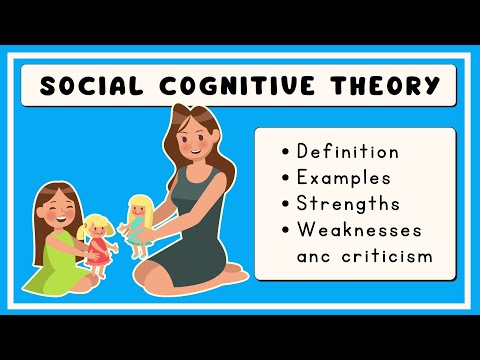
Alright, let’s talk about how we act. You know that feeling when you can’t help but do something just because everyone else is doing it? There’s actually a cool name for that—Cognitive Social Theory.
This whole idea digs into how our thoughts and social environments shape our behavior. Sounds pretty deep, right? But stick with me.
Ever found yourself in a situation where you suddenly felt the urge to join in on something? Maybe your friends were raving about that new restaurant or trying out a funky dance move. That’s basically this theory at work!
So, what’s the deal with Cognitive Social Theory? It’s all about what influences us—like observations, interactions, and even our own beliefs. Trust me, understanding this will make you see your own choices in a whole new light!
Exploring the Connection Between Social Cognitive Theory and Behavioral Outcomes
Social Cognitive Theory (SCT) is all about how we learn from observing others. It’s like that time you picked up a cool skill by watching your buddy. You know, the way they skateboard or cook, and you’re like “I wanna do that!” So, why does this matter? Well, it’s about understanding how observation influences our behavior.
Learning through Observation is central in SCT. When you see someone succeed at something, it can motivate you to try it too. This isn’t just about copying them; it’s also about learning what works and what doesn’t. For instance, if you watch a friend ace their presentation because they prepared well, you might pick up on the importance of preparation yourself.
Now let’s talk about self-efficacy. It sounds fancy but basically means your belief in your own abilities. If you think you can achieve something based on what you’ve seen others do, you’ll be more likely to try it out. Imagine you saw your sibling go through tough times but come out strong after studying hard for exams. Their example boosts your confidence in tackling your own studies.
Then there’s reciprocal determinism. It’s this idea that our behavior is shaped by personal factors (like thoughts and feelings), environmental influences (like peers and social norms), and the behaviors we choose to engage in. Think of it this way: If you’re part of a sports team and everyone is working hard during practice (environment), you’ll probably push yourself harder too (behavior). This interaction creates a cycle of motivation!
So when we’re looking at behavioral outcomes, we see how SCT explains why people act the way they do based on their observations and experiences. For instance, if someone grows up seeing their parents volunteer regularly, they might develop a habit of giving back too as adults.
Another key point is modeling. We often imitate behaviors we see from role models – whether it’s in sports or even social situations. If you witness someone standing up for themselves during an argument effectively, you’re likely to adopt that approach in similar situations later on.
Lastly, there’s the whole idea of reinforcement. When behaviors are rewarded or recognized after being observed—like praise for doing well on a project—you’re more inclined to repeat those actions yourself.
In short, Social Cognitive Theory connects the dots between what we observe in others and how that shapes our own actions and beliefs. By understanding this link, we can better grasp how personal motivation and social environments play out in our day-to-day lives!
Understanding the Cognitive Theory of Behavior: Key Concepts and Implications
Sure thing! Let’s break down the **Cognitive Theory of Behavior** and see how it relates to **Cognitive Social Theory** in a straightforward way.
Cognitive theory focuses on how we think, what we perceive, and how those thoughts shape our behaviors. It’s like saying our minds are a bit like computers, processing information that influences what we do. Our thoughts create patterns that can really affect how we respond to different situations.
Key Concepts:
- Thought Patterns: These are the ways you automatically think about things. For example, if you constantly believe you’ll fail at everything, your actions will probably reflect that belief—you might not even try!
- Cognitive Dissonance: This is when you have conflicting beliefs or attitudes. Like if you know smoking is bad but continue to smoke anyway. That tension can lead you to change your behavior or justify it somehow.
- Self-Efficacy: This fancy term is just about belief in your own abilities. If you think you can succeed at something—like acing a test—you’re more likely to put in the effort and actually do well.
- Social Learning: This part looks at how we learn from watching others. If your friend succeeds after studying hard, you might be inspired to hit the books too.
So, what’s the deal with Cognitive Social Theory? It’s like an extension of cognitive theory that emphasizes the social aspects of learning and behavior shaping. It tells us that not only do our thoughts impact us individually, but they’re also influenced by our environment and social interactions.
Think about this: have you ever noticed how behavior changes when you’re with different groups of people? You might act one way around friends and another around family. That’s exactly what Cognitive Social Theory explains! The idea is that observation and interaction drive a lot of our behaviors.
Implications for Behavior:
- Stereotypes and Expectations: If society tells us certain groups are less capable, some individuals might internalize those beliefs and limit themselves accordingly.
- Modeling Behavior: Children often mimic adults’ actions—they’ll imitate parents or teachers without even realizing it! This shows how powerful social influences can be on developing behaviors.
- Change through Awareness: Understanding your thought patterns can help challenge negative beliefs. This means you have the power to shift your mindset.
Remember back in school when everyone was nervous before exams? Some students would prepare obsessively because they believed their success depended solely on their effort. Meanwhile, others thought, «I’ll never pass,” leading them to not study at all! Here’s where cognitive theory really shines: it highlights how perceptions influence outcomes.
In sum, understanding these concepts helps us see why we behave the way we do—and gives us tools to change those behaviors when they don’t serve us anymore. So next time you’re feeling stuck in a pattern of thinking or behavior, remember there’s a whole framework behind it!
Understanding Social Cognitive Behavioral Theory: Key Concepts and Applications
So, let’s chat about Social Cognitive Behavioral Theory. It’s one of those concepts that helps us get what drives our behavior in social settings. Basically, this theory suggests that our thoughts, feelings, and actions are all interlinked and influence each other. You know? Like a big tangled ball of yarn where pulling on one part affects the whole thing.
First off, **key concepts** in this theory include:
- Observational Learning: You learn by watching others. Think about kids mimicking a parent or friend. If they see someone being kind, they might try to act similarly.
- Self-Efficacy: It’s all about believing you can do something. If you think you can handle a big presentation at work, you’re more likely to show up ready to go.
- Cognitive Processes: Your thoughts play a huge role in how you respond to situations. For example, if you think everyone is judging you at a party, you’re probably going to feel anxious.
- Reciprocal Determinism: This fancy term means your environment, behavior, and personal factors are all constantly influencing each other. It’s like a dance; they move together.
Now imagine this: You’re at a family gathering where your cousin keeps telling jokes that make everyone laugh. You notice how much attention he gets and think, “Hey! I want that too!” So next time you get together with friends, you might try cracking some jokes yourself because you’ve observed it before.
Applications of Social Cognitive Behavioral Theory are pretty wide-ranging:
- Mental Health Treatments: Therapists often use these ideas when helping clients change negative thought patterns that contribute to issues like anxiety or depression.
- Education: Teachers can utilize observational learning by modeling positive behaviors or skills for their students. If they show enthusiasm about learning something new, students are likely to mimic that attitude.
- Behavior Change Programs: Programs aimed at promoting healthier lifestyles—like quitting smoking or exercising more—often incorporate self-efficacy techniques to help people believe they can make changes.
Isn’t it interesting? Just think about how a simple shift in your mindset can lead to real changes in behavior! For instance, if someone believes they can successfully lose weight, they’re more likely to stick with healthy eating habits and exercise routines.
In summary, Social Cognitive Behavioral Theory highlights the importance of the social environment on individual behavior while also taking into account personal thought processes. It’s like being thrown into a whirlpool where your mind and surroundings constantly shape what you do next! Understanding this stuff helps us see why we act the way we do and gives us tools for making positive changes when needed.
Cognitive Social Theory is pretty interesting stuff, to be honest. It dives into how our thoughts and the social environment kinda shape how we behave. You know, it’s like when you see your friend succeed at something and it makes you want to try harder too. That’s social learning in action!
Think about it for a second. Remember that time you were really hesitant to join a new sport? But then you saw someone else adding some extra effort and having fun with it? Just that little spark from observing someone else can push you to step outside your comfort zone. I mean, it’s wild how powerful those moments can be, right?
The whole idea here is that we learn not just from our own experiences but also by watching others. So, if someone sees a buddy getting praised for helping out or being super friendly, there’s a good chance they’ll start mirroring that behavior. It’s like picking up little nuggets of wisdom from the people around us.
And what about self-efficacy? That’s another cool part of Cognitive Social Theory! It’s basically believing in your own ability to accomplish stuff. If you think you’re good at something—like drawing or playing an instrument—you’re way more likely to stick with it even when things get tough. That boost in confidence can change everything.
But here’s the kicker: this theory doesn’t just apply to good vibes only! If someone is stuck in a negative environment—like constantly seeing aggression or criticism—they might start picking up on those behaviors too. It’s like conditioning; negativity breeds negativity.
So yeah, Cognitive Social Theory shows us that behavior isn’t just influenced by personal choices or internal thoughts; it really is intertwined with social contexts and interactions. Those connections can shape who we are and how we navigate the world all around us. It makes me think twice about who I hang out with and how their behavior might rub off on me, doesn’t it?