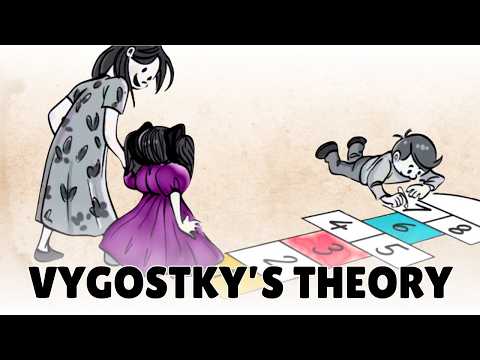
So, Vygotsky, right? The guy had some pretty interesting ideas about how we grow up and learn. You know how your friends and family shape who you are? He kinda took that to another level.
Imagine a kid trying to learn something new. That’s hard! But what if they had a cool older sibling or a patient parent helping them out? Suddenly, it’s not just about the kid; it’s about the whole environment around them.
Vygotsky believed that culture plays a huge role in this process. It’s like we’re all part of this big team where everyone influences each other. It’s not just books and teachers—it’s way more than that.
The thing is, understanding this can really change how you see learning and development. Pretty neat idea, huh? Let’s chat more about what he meant by all this!
Exploring Vygotsky’s Theory: The Impact of Cultural Influence on Child Development
So, let’s talk about Vygotsky. He was this super interesting psychologist who really shook things up with his ideas on child development. Basically, he believed that culture plays a huge role in how kids grow mentally and socially.
Vygotsky argued that our brains don’t just develop in a vacuum. Instead, social interaction and cultural context are like the soil that helps a plant grow. You know how kids pick up languages or social norms from their families? That’s part of Vygotsky’s whole deal.
One big idea he introduced was the Zone of Proximal Development (ZPD). It’s kind of like a sweet spot where learning happens best. Imagine you’re trying to teach a kid to ride a bike. They can’t do it alone yet, but with your help, they get better. So, the ZPD is all about finding that balance between what a child can do alone and what they can achieve with guidance.
Vygotsky also pointed out the importance of cultural tools. Think about it: you might have grown up with different toys, stories, or ways of learning than someone from another culture. These cultural tools shape how we think and learn. For instance, if you had building blocks as a kid, you might have developed better spatial skills than someone who played mainly with dolls.
Another key point is this idea called scaffolding. It’s when adults or more knowledgeable peers provide support to help kids achieve tasks they can’t quite do yet on their own. Like when your older sibling helps you understand math homework—this guidance gives you just enough push to get there!
Plus, Vygotsky believed in language as a tool for cognitive development. He thought that through language—we learn not just to communicate but also to think critically and solve problems. When we engage in conversations—especially those deep ones with family or friends—our thinking processes expand.
So let’s say you’re playing school with your friends as kids; you’re not just pretending—you’re actually learning how to interact socially! You’re practicing rules like sharing and taking turns while soaking up societal norms.
In summary, Vygotsky’s ideas emphasize that children aren’t isolated learners; they thrive within their cultural contexts through interactions and guidance from others around them—a pretty cool way to look at growth!
Understanding Vygotsky’s Sociocultural Theory: Practical Examples and Applications
Vygotsky’s Sociocultural Theory is super interesting and really helps us understand how our cultural background shapes the way we think and learn. Basically, his idea is that our social interactions and the culture we grow up in play a huge role in developing our cognitive abilities.
One of the core concepts he introduced is the **Zone of Proximal Development (ZPD)**. This is where you find the gap between what you can do on your own and what you can do with help from someone else—like a teacher or a peer. Think about that moment in class when you’re stuck on a math problem. You can solve some issues by yourself, but when your classmate whispers a hint, it clicks! That’s your ZPD in action.
Vygotsky also emphasized **cultural tools**, which are like the gadgets we use to think and communicate. These tools include language, symbols, and even technology. For example, when kids play with blocks, they’re not just stacking; they’re using their imagination and social skills to negotiate and collaborate with others. This shows how even simple play can help develop complex thinking skills through cultural interaction.
Another point he made is about **scaffolding**. This is when someone provides support at first but gradually takes it away as you become more competent. Imagine learning to ride a bike; your parent holds onto the seat at first, giving you confidence until you’re ready to pedal on your own without falling over. This process illustrates how guidance from others makes learning more effective.
It’s not just about adults teaching kids either. Peer interactions are super valuable too! When kids work together on group projects, they share different perspectives and learn from each other’s strengths—which makes them smarter cumulatively!
In practical terms, Vygotsky’s ideas are used in classrooms everywhere today. For instance, teachers often set up group activities where students learn from one another instead of just listening to lectures all day long. They might say something like, “Okay team, solve this problem together!” It gets everyone involved!
His theory also highlights the importance of **language development** as well as social speech versus inner speech. Initially, we talk out loud when solving problems (social speech), but eventually we start using internal dialogue—like thinking through an equation in our heads next time instead of saying it out loud (inner speech). This transformation showcases how language actually shapes our thoughts over time.
So overall, Vygotsky’s take on psychological development reminds us that we’re not islands operating alone; we’re constantly influenced by our surroundings—from family to peers to cultural practices—playing an integral role in how we develop cognitively throughout life!
Comprehensive Guide to Vygotsky’s Sociocultural Theory: Downloadable PDF Resource
Vygotsky’s Sociocultural Theory is all about how our environment and culture shape the way we think, learn, and grow. He believed that social interactions play a huge role in cognitive development. Basically, the people around you—your parents, friends, teachers—help mold your thinking.
One of the main ideas he had was the concept of the Zone of Proximal Development (ZPD). This means there’s a sweet spot for learning where you can’t do something on your own yet, but with a little help from someone more knowledgeable, you totally can! For example, think about a kid learning to ride a bike. Alone, they might struggle. But with an adult’s guidance—even just holding the seat—they’ll get it!
Vygotsky also emphasized cultural tools, like language and symbols. He thought these tools are crucial for mental development. When you’re talking or writing about your thoughts and feelings, it actually helps you organize them better in your mind. You know how sometimes just saying what’s bothering you to a friend can clear things up? That’s this in action!
Another cool aspect is his take on scaffolding. This describes how teachers (or anyone helping) provide support to students as they learn new concepts. It’s like building a house; first, you put up scaffolding so it stands tall until it’s strong enough to stand on its own!
And let’s not forget social interaction. Vygotsky believed that we learn best when we engage with others. Collaboration leads to deeper understanding because different perspectives challenge our own thinking—you might have had those moments where discussing an idea with someone suddenly makes everything click into place.
Here are some key points to consider:
- Social Context is Key: Our peers and culture significantly influence our cognitive skills.
- Language Shapes Thought: The way we communicate impacts how we understand the world.
- ZPD: Support from others is essential for maximizing learning potential.
- Cultural Tools: Things like language and symbols aid cognitive growth.
- Scaffolding is Essential: Temporary support helps learners achieve independence.
By digging into Vygotsky’s ideas, you’re not just looking at individual learning but understanding how cultural influences ripple through communities! It’s fascinating stuff that underscores just how intertwined our social lives are with our brainpower.
You know, it’s pretty wild when you think about how much our environment shapes who we are. Like, I remember in school, I had this teacher who would always say that the way people learn is super influenced by their culture. It took me a while to really get that, though. But then I came across Vygotsky, and everything started making sense!
Lev Vygotsky was this Russian psychologist who looked at how kids develop and learn in a really unique way. He wasn’t just interested in what kids could do on their own; he thought it was way more important to see how they interact with others and their surroundings. It’s like he figured out that we’re sort of like sponges, soaking up information from the world around us.
One of his big ideas is the “Zone of Proximal Development,” or ZPD for short. Basically, it’s this space where learning happens best—when you can do a task with a little help but can’t quite do it alone yet. And here’s the kicker: he believed that what you learn and how you learn it can depend heavily on your cultural background. So if you grow up in a place where storytelling is huge, you’re likely going to pick up language skills differently than someone from a more tech-focused culture.
I remember hearing about a study where children from different cultures were asked to solve puzzles. The kids whose families praised cooperation did better when they worked together than those who were taught to compete individually. It just goes to show that our upbringing doesn’t just influence our skills but shapes how we see collaboration and problem-solving.
Think about your own life for a second. Ever noticed how your friends or family may approach challenges differently based on where they come from? Maybe some people rely more on community support while others try to tackle things solo. It’s all part of that cultural influence Vygotsky talked about.
Vygotsky didn’t just stop at education; he also had insights into social interactions and emotional development. He understood that language isn’t merely about communication but plays a crucial role in thinking and understanding oneself and others.
So yeah, Vygotsky’s ideas make you realize how interconnected everything is—our culture, our environment, our learning processes—all swirling together like ingredients in one big stew! It just drives home the point that psychology isn’t this isolated field; it’s all about people living together, learning from each other, and growing as individuals shaped by those around them. Pretty cool stuff if you ask me!