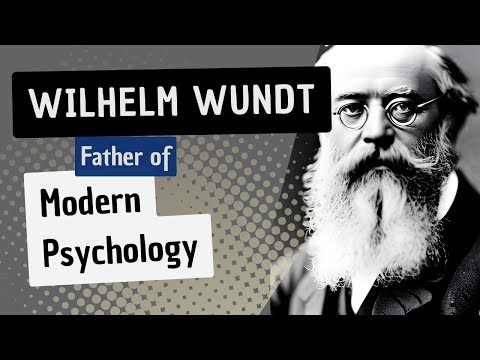
So, let’s talk about Wilhelm Wundt. Ever heard of him? Yeah, he’s kind of a big deal in the world of psychology.
Picture this: late 19th century, and this guy’s like, “Hey, let’s make psychology a proper thing.” He opened the first lab dedicated to studying the mind. Like, who does that?
Wundt was all about looking at thoughts and feelings in a scientific way. It sounds simple now, but back then? Total game changer!
He really paved the way for how we understand ourselves today. Seriously! Without him, psychology might still be stuck in some dusty corner of philosophy or something. So yeah, let’s dig into what made Wundt such a trailblazer!
The Significance of Wilhelm Wundt in the Development of Modern Psychology
Wilhelm Wundt is often regarded as the father of modern psychology, and for good reason. He was the first to establish a dedicated laboratory for psychological research in 1879 at the University of Leipzig in Germany. This was a big deal because it marked the shift of psychology from philosophy and speculation into a scientific discipline. Before Wundt, psychology was pretty much about introspection and subjective observations. His work helped change that!
Wundt believed that to understand the human mind, you needed to study behavior scientifically. He focused on breaking down mental processes into their most basic components, which he called structuralism. This approach aimed to analyze consciousness by examining thoughts, feelings, and perceptions through methods like introspection—where researchers would look inwardly and report their thoughts.
Another cool thing about Wundt is that he developed experimental psychology. He used controlled experiments to observe how people react under various conditions. For example, he might use a simple task where subjects had to press a button as soon as they perceived a sound. This kind of experimental setup laid the groundwork for later studies in cognitive psychology.
But that’s not all! Wundt also distinguished between two aspects of psychology: immediate experience, which refers to direct perception, and mediated experience, where our understanding is influenced by previous knowledge or culture. He believed both were essential in understanding how people interpret the world around them.
He didn’t just stop at defining methods; he also wrote extensively. His book, Principles of Physiological Psychology, published in 1874, is considered one of the foundational texts for psychological science. In it, Wundt argued that psychology should focus on the study of conscious experience using scientific methods.
You know what’s interesting? Many people don’t realize how his ideas spread beyond Germany. His students traveled worldwide after studying under him and set up their own labs in places like America and Europe. They took his principles with them! This led to the rise of different psychological schools—like functionalism in America—which focused more on how mental processes help us adapt rather than just examining their structure.
While some modern psychologists might critique aspects of Wundt’s work—like his reliance on introspection—there’s no denying his role in professionalizing psychology as an empirical science. In many ways, he helped cement its place alongside fields like biology or chemistry.
In short, Wilhelm Wundt’s significance lies not just in what he did but in how it paved the way for future generations of psychologists. His blend of empirical research with theoretical foundations allows us today to explore human behavior with depth and rigor while continuing to evolve our understanding every day!
Exploring Wundt’s Legacy: Impact on Psychology and Modern Research
Wilhelm Wundt is often labeled as the «father of modern psychology.» But what does that actually mean? Wundt was one of the first to establish psychology as a formal science in its own right, separate from philosophy and biology. He set up the first laboratory dedicated to psychological research at the University of Leipzig in 1879. This was huge! Imagine a place where people could actually study the human mind systematically instead of just talking about it.
One of Wundt’s main contributions was his focus on experimental methods. He believed that you could use controlled experiments to understand how people think and feel. This was a big shift from just observing behavior or relying on philosophical debates. In his lab, he used introspection, which is basically when you ask someone to reflect on their internal experiences while undergoing certain stimuli—like looking at an object or listening to a sound.
Now, some might say introspection isn’t super reliable because it’s subjective. And that’s fair! But at the time, it was revolutionary. Wundt laid down groundwork for future experimental approaches in psychology, which led to methods we use today. So when you think about research methods now—like behavioral tests, surveys, or even brain imaging—you can trace that back to his early ideas.
His approach broke down mental processes into simpler components like sensations and feelings. This idea influenced later schools of thought like structuralism, which aimed to analyze consciousness into its basic elements. Think of it this way: if your mind is like a car engine, structuralism tried to figure out how all those parts work together by looking at them individually.
Wundt’s work also paved the way for other famous psychologists, such as John Dewey and William James. They took his foundational ideas and built upon them in various ways—Dewey with pragmatism and James with functionalism—letting us see more about how our minds adapt and function in real-life situations.
In modern psychology research, even if we don’t directly follow everything Wundt did, his impact is still felt today. Take cognitive psychology for example; this branch focuses on mental processes much like Wundt’s early work but uses advanced techniques like brain scanning technology instead of just introspection. We still ask questions about perception, memory, and consciousness—the very things he initiated discussions around!
So when you look at Wundt’s legacy today, it’s not just about his experiments; it’s also about inspiring an entire field to explore the human experience through science rather than just speculation. His emphasis on rigorous study has created pathways for newer generations of psychologists who continue to delve into what makes us tick.
In a nutshell, Wundt didn’t just carve out a niche for psychology; he opened up vast landscapes for exploration that we’re still roaming through today! It’s pretty wild how one person’s passion can ripple through time like that—reminding us that understanding our minds continues to be an evolving journey.
The Pioneering Contributions of Wilhelm Wundt: The Father of Modern Psychology
Wilhelm Wundt is often called the Father of Modern Psychology, and for good reason. Back in the late 19th century, he did something revolutionary: he made psychology a real science. Before Wundt, people mostly thought about human behavior in pretty vague terms. He basically took a scientific approach to studying the mind, which was totally groundbreaking at the time.
Wundt opened the first psychology lab in 1879 at the University of Leipzig in Germany. This was a huge deal because it marked the shift from philosophy to empirical research. In his lab, he focused on measuring conscious experience through carefully controlled experiments, which was like saying, “Hey! We can study thoughts just like we study physics or chemistry!”
To do this, Wundt employed a method known as introspection. This means he asked subjects to reflect on their own experiences and report what they felt or thought when exposed to specific stimuli. For instance, if someone looked at a color and described their feelings about it, that’s introspection in action! It’s kind of like asking your friend how they feel when they hear a certain song.
Wundt also believed that mental processes could be broken down into simpler components. He called this approach structuralism. Imagine building something complex—like a Lego castle—you start with basic blocks before you create the whole thing. Similarly, Wundt thought that by analyzing thoughts and feelings into smaller parts, we could understand the bigger picture of human consciousness.
His work laid the groundwork for many areas of psychology as we know them today. His ideas influenced other psychologists like Edward Titchener and G. Stanley Hall who expanded on structuralism and experimental psychology respectively.
Another exciting thing about Wundt was his interest in cultural psychology. He believed that our minds are shaped not just by individual experiences but also by our culture and society. He published works discussing how language, myths, and customs all affect psychological processes. This idea set off discussions that continue to influence fields like social psychology and cultural studies today.
Wundt also divided psychology into two branches: physiological psychology, which focuses on the brain’s role in behavior; and volkerpsychologie, which studies collective aspects of human thought like language and social customs. This division opened up a lot of avenues for future research.
So yeah, Wilhelm Wundt’s contributions are massive! By establishing experimental methods in psychology and emphasizing the importance of culture in shaping our minds, he really set modern psychology on its path. His legacy is still felt across various domains within mental health today—when you think about how much we try to understand behavior scientifically now, he’s definitely one of those big thinkers behind it all!
Wilhelm Wundt, often dubbed the «father of psychology,» really changed the game back in the late 19th century. Imagine a time when psychology wasn’t even recognized as a field of study! It was all about philosophy and physiology, but Wundt saw something different. He believed that the human mind could be studied scientifically, just like any other natural phenomenon.
Think about it for a second—there’s Wundt, sitting in his lab in Leipzig, Germany, trying to peel back the layers of human experience with methods that were pretty groundbreaking for his time. I mean, this guy set up an actual psychological lab! He brought in his subjects and had them report their thoughts and feelings after being exposed to various stimuli. It’s like he was saying, “Hey people! Let’s use science to understand how we think!”
His focus on introspection was super innovative but also kinda controversial at times. He wasn’t just looking at what people did; he wanted to know what they felt and thought about those actions. But here’s where it gets even more interesting: while introspection has its limits—like how reliable our self-reports really are—Wundt paved the way for future methods in psychology.
What catches my attention is how much his work resonates today. If you think about modern psychology courses or cognitive science research, you can trace some roots back to him. His ideas branched out into multiple schools of thought—behaviorism, functionalism—you name it.
It’s almost poetic when you consider how this one guy sparked a whole movement! There’s something inspiring about someone challenging the norm and forging a new path. Sometimes I wonder if we’d even have discussions around mental health or how emotions affect behavior if Wundt hadn’t taken that leap.
At the end of the day, remembering Wundt reminds us that curiosity can lead to significant changes in how we understand ourselves. Psychology isn’t just a collection of theories; it’s an evolving narrative shaped by pioneers who dared to ask tough questions and explore uncharted territory.