So, you know how we all have that one friend who’s super into psychology? The one who can’t help but drop knowledge bombs at parties? Well, today we’re diving into something kinda like that. It’s about Wundt and how he totally changed the game for modern psychology.
Imagine this: back in the day, people were just scratching their heads over why we do what we do. Enter Wilhelm Wundt, the guy who decided to put some structure behind all that chaos. He was like the OG of psychology! Seriously.
Wundt’s ideas laid down the foundations for how we think about our minds today. But it’s not just about him being a big name; it’s what he did and how it still echoes through modern methods and theories. You follow me?
So let’s explore how this dude’s influence still shapes the way we look at human behavior and mental processes! Sound cool?
The Lasting Influence of Wilhelm Wundt on Contemporary Psychology
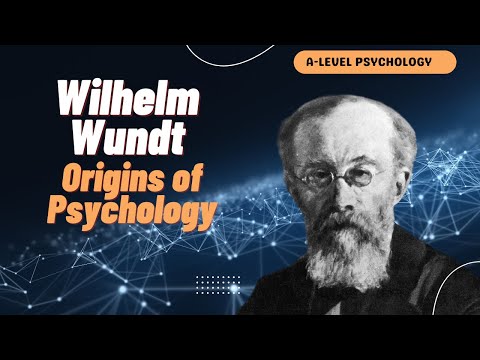
Wilhelm Wundt is often considered the father of psychology. His work laid the groundwork for how we understand human behavior today. Seriously, his influence runs deep in contemporary psychology, shaping both thought and methods.
Wundt set up the first psychological laboratory in 1879 at the University of Leipzig. This was a huge leap! He treated psychology as a science that could be studied through observation and experimentation, like physics or chemistry. You can imagine how radical that was at the time when psychology was more about philosophy than anything else.
One key point of Wundt’s approach was his emphasis on introspection. This means looking inward to examine our own thoughts and feelings. While modern psychology has moved away from this method for scientific studies, it’s still important in areas like therapy or self-reflection. Think about how you might analyze your feelings after a tough day; that’s introspection in action.
Also, Wundt introduced two categories of psychological study: immediate experience and mediation. Immediate experiences are direct perceptions—like seeing a sunset. Mediation involves interpreting those experiences, such as thinking about what that sunset means to you or how it makes you feel. While we don’t always focus strictly on those categories anymore, they hint at how complex our experiences are.
In addition to all this, Wundt’s work ushered in an era where researchers began using more systematic methods to study behavior. Today’s experimental psychology owes a lot to his ideas regarding controlled observation and measurement of psychological phenomena—things we take for granted now!
You can see his influence in various fields too! For example, cognitive psychology focuses on how people think, learn, and remember—areas directly tied back to Wundt’s focus on consciousness and mental processes.
Furthermore, Wundt’s notion that cultural factors shape our psychology is still super relevant today. He believed understanding different cultures helps psychologists grasp human behavior better. So when you’re looking at modern topics like cross-cultural psychology or even global mental health issues, know it all circles back to Wundt’s initial ideas.
In summary, Wilhelm Wundt laid down much of the infrastructure we build upon in contemporary psychology—the way we study minds, conduct experiments, and even think about culture’s role in shaping us as humans is all influenced by him. His legacy is pretty much woven into the fabric of modern psychological inquiry; no kidding!
Exploring Wundt’s Key Contributions to Modern Psychology
Wilhelm Wundt, often called the «father of experimental psychology,» kicked off the whole psychology thing back in the late 19th century. His big idea? That we could study the human mind scientifically. Before Wundt, psychology was more about philosophy and speculation. He thought, wait a minute, we can do better than that!
So, here’s what Wundt did: he established the first psychological laboratory in 1879 at the University of Leipzig. This wasn’t just a room with some chairs and desks; it was a place where people could do real experiments that looked at how humans think and behave. That’s seriously groundbreaking!
He introduced introspection, which basically means looking inward to examine your own thoughts and feelings. Participants would report their experiences based on stimuli like sounds or colors. Imagine hearing a bell and then trying to describe your inner experience—like explaining how you feel about that sound. It’s pretty tricky, but it laid important groundwork for studying consciousness.
Wundt also focused on structuralism. This approach aimed to break down mental processes into their most basic components—sort of like analyzing a recipe ingredient by ingredient instead of just tasting the dish. His idea was that if you understood these basic elements, you’d get a clearer picture of how our minds work.
Now, let’s talk about two key contributions:
- The Volkerpsychologie: Wundt believed that to really understand complex mental functions like culture or language, you couldn’t just rely on introspection alone; you needed to study society as well. He wanted psychologists to look at social factors influencing thoughts and behaviors.
- The scientific method: He emphasized that psychology should be treated like a science—it should involve careful observation and experimentation to gather data about behavior.
Here’s something cool: Wundt’s work paved the way for later psychological movements, including behaviorism and cognitive psychology. Like, without him wanting to experiment and study human experience systematically, who knows where modern psychology would be right now?
Consider this: when psychologists today use methods like surveys or experiments in controlled settings—like measuring reaction times or brain activity—they’re echoing Wundt’s initial push for scientific rigor in understanding mental processes.
In summary, Wundt didn’t just make some small tweaks; he transformed psychology from a mix of philosophy into an actual scientific discipline we recognize today. His influence is everywhere—in experimental methods we use now and even in fields like social psychology! So next time you hear about modern psychological practices, remember there’s this guy from over a hundred years ago laying down some seriously solid groundwork for all of it!
Exploring the Philosophical Influences on Wundt’s Work: Key Thinkers and Theories
Wundt is often called the «father of experimental psychology,» and his work didn’t just spring up out of nowhere. He was deeply influenced by philosophical ideas of his time, and that made a big impact on how modern psychology came to be. Let’s take a look at some key thinkers and theories that shaped his views.
1. Immanuel Kant: You can’t talk about Wundt without mentioning Kant. He believed in the importance of a priori knowledge, which means understanding things that we know before experience. This idea pushed Wundt to think about how experiences are processed through our senses but also shaped by our minds.
2. Johann Friedrich Herbart: Herbart was all about psychology as a science. He argued for systematic observation and experimentation, which is huge for psychology today! Wundt took this seriously, pioneering methods that emphasized controlled conditions in experiments.
3. Georg Wilhelm Friedrich Hegel: Hegel’s ideas on consciousness also played a role in Wundt’s thinking. Hegel believed in the development of self-awareness through interactions with society, something Wundt integrated into his concept of social psychology.
4. Auguste Comte: The father of positivism, Comte championed the idea that knowledge should be based on observable phenomena. This resonated with Wundt and helped him establish psychology as a rigorous science separate from philosophy.
5. Wilhelm von Humboldt: Humboldt focused on language and its connection to thought, which intrigued Wundt significantly. This connection led him to explore how language influences cultural development—an idea he emphasized in his studies on *Volkerpsychologie* (folk psychology).
Wundt’s blend of these philosophical influences built a strong foundation for psychological experiments and methodologies that we still use today! He set out to make psychology a science based on empirical evidence, moving away from just speculation.
So, there you have it: Wundt was not working in isolation; he drew upon many influential thinkers who paved the way for modern psychological practices and theories. His legacy lives on every time research is conducted or theory is challenged within the realm of psychology!
So, let’s take a little trip back in time, shall we? Picture this: it’s the late 19th century, and a guy named Wilhelm Wundt is setting up what he calls the first psychology lab in Leipzig, Germany. I mean, this was a pretty big deal! Before Wundt came along, psychology wasn’t really considered a serious science. It was more like philosophy with some guessing thrown in. But Wundt kicked down that door.
He really believed that to study the mind scientifically, you needed to observe it through controlled experiments. That’s kind of where the whole idea of experimental psychology took off. Imagine waking up one day realizing your thoughts and feelings could actually be measured and analyzed! Sounds exciting, right?
Wundt focused on introspection—basically asking people to look inward at their experiences while doing tasks. Now, sure, it sounds kind of touchy-feely when you think about it. But his method encouraged serious debate on what science should even be about when it comes to psychology.
Fast forward to today: you’ll find Wundt’s influence everywhere! Modern psychological methods often trace their roots back to those early days of experimentation he championed. Even if today we lean more on brain scans and massive datasets rather than just asking someone how they feel about their experiences while staring at a dot on a screen.
But here’s something cool: while we’ve moved towards more high-tech methods, there’s still something very human about understanding how thoughts and feelings work together. That emotional landscape? Yeah, that still matters! His emphasis on consciousness laid the groundwork for various psychological fields—from cognitive psychology all the way to clinical practices.
Here’s an interesting thought: without Wundt pushing for that scientific approach, would we even have the diverse fields we do now? Think about cognitive behavioral therapy or neuropsychology—they rely so heavily on experimental findings that trace back to his work!
In a nutshell? Wundt opened our eyes (and minds) to seeing psychology through a scientific lens. He made us realize it wasn’t just guesswork anymore; our thoughts had structure and could be studied systematically. So next time you hear someone say psychology isn’t a «real» science, just remember ol’ Wundt—he’s been whispering in our ears since the beginning!